AI Analytical Pte Ltd

AI Analytical Pte Ltd — independent reviews, comparisons, pricing and step-by-step guides on Aizhi.

  • Virtual assistant

    Virtual assistant

    A virtual assistant (VA) is a software agent that can perform a range of tasks or services for a user based on user input, such as commands or questions, including verbal ones. Such technologies often incorporate chatbot capabilities to streamline task execution. The interaction may be via text, graphical interface, or voice, as some virtual assistants are able to interpret human speech and respond via synthesized voices. In many cases, users can ask their virtual assistants questions, control home automation devices and media playback, and manage other basic tasks such as email, to-do lists, and calendars – all with verbal commands. In recent years, prominent virtual assistants for direct consumer use have included Apple Siri, Amazon Alexa, Google Assistant (Gemini), Microsoft Copilot and Samsung Bixby. Also, companies in various industries often incorporate some kind of virtual assistant technology into their customer service or support. Into the 2020s, the emergence of artificial intelligence based chatbots, such as ChatGPT, has brought increased capability and interest to the field of virtual assistant products and services. == History == === Experimental decades: 1910s–1980s === Radio Rex was the first voice-activated toy, patented in 1916 and released in 1922. It was a wooden toy in the shape of a dog that would come out of its house when its name is called. In 1952, Bell Labs presented "Audrey", the Automatic Digit Recognition machine. It occupied a six-foot-high relay rack, consumed substantial power, had streams of cables and exhibited the myriad maintenance problems associated with complex vacuum-tube circuitry. It could recognize the fundamental units of speech, phonemes. It was limited to the accurate recognition of digits spoken by designated talkers. It could therefore be used for voice dialing, but in most cases, push-button dialing was cheaper and faster, rather than speaking the consecutive digits. Another early tool which was enabled to perform digital speech recognition was the IBM Shoebox voice-activated calculator, presented to the general public during the 1962 Seattle World's Fair after its initial market launch in 1961. This early computer, developed almost 20 years before the introduction of the first IBM Personal Computer in 1981, was able to recognize 16 spoken words and the digits 0 to 9. The first natural language processing computer program or the chatbot ELIZA was developed by MIT professor Joseph Weizenbaum in the 1960s. It was created to "demonstrate that the communication between man and machine was superficial". ELIZA used pattern matching and substitution methodology into scripted responses to simulate conversation, which gave an illusion of understanding on the part of the program. Weizenbaum's own secretary reportedly asked Weizenbaum to leave the room so that she and ELIZA could have a real conversation. Weizenbaum was surprised by this, later writing: "I had not realized ... that extremely short exposures to a relatively simple computer program could induce powerful delusional thinking in quite normal people. This gave name to the ELIZA effect, the tendency to unconsciously assume computer behaviors are analogous to human behaviors; that is, anthropomorphisation, a phenomenon present in human interactions with virtual assistants. The next milestone in the development of voice recognition technology was achieved in the 1970s at the Carnegie Mellon University in Pittsburgh, Pennsylvania with substantial support of the United States Department of Defense and its DARPA agency, funded five years of a Speech Understanding Research program, aiming to reach a minimum vocabulary of 1,000 words. Companies and academia including IBM, Carnegie Mellon University (CMU) and Stanford Research Institute took part in the program. The result was "Harpy", it mastered about 1000 words, the vocabulary of a three-year-old and it could understand sentences. It could process speech that followed pre-programmed vocabulary, pronunciation, and grammar structures to determine which sequences of words made sense together, and thus reducing speech recognition errors. In 1986, Tangora was an upgrade of the Shoebox, it was a voice recognizing typewriter. Named after the world's fastest typist at the time, it had a vocabulary of 20,000 words and used prediction to decide the most likely result based on what was said in the past. IBM's approach was based on a hidden Markov model, which adds statistics to digital signal processing techniques. The method makes it possible to predict the most likely phonemes to follow a given phoneme. Still each speaker had to individually train the typewriter to recognize their voice, and pause between each word. In 1983, Gus Searcy invented the "Butler in a Box", an electronic voice home controller system. === Birth of smart virtual assistants: 1990s–2010s === In the 1990s, digital speech recognition technology became a feature of the personal computer with IBM, Philips and Lernout & Hauspie fighting for customers. Much later the market launch of the first smartphone IBM Simon in 1994 laid the foundation for smart virtual assistants as we know them today. In 1997, Dragon's NaturallySpeaking software could recognize and transcribe natural human speech without pauses between each word into a document at a rate of 100 words per minute. A version of Naturally Speaking is still available for download and it is still used today, for instance, by many doctors in the US and the UK to document their medical records. In 2001 Colloquis publicly launched SmarterChild, on platforms like AIM and MSN Messenger. While entirely text-based SmarterChild was able to play games, check the weather, look up facts, and converse with users to an extent. The first modern digital virtual assistant installed on a smartphone was Siri, which was introduced as a feature of the iPhone 4S on 4 October 2011. Apple Inc. developed Siri following the 2010 acquisition of Siri Inc., a spin-off of SRI International, which is a research institute financed by DARPA and the United States Department of Defense. Its aim was to aid in tasks such as sending a text message, making phone calls, checking the weather or setting up an alarm. Over time, it has developed to provide restaurant recommendations, search the internet, and provide driving directions. In November 2014, Amazon announced Alexa alongside the Echo. In 2016, Salesforce debuted Einstein, developed from a set of technologies underlying the Salesforce platform. Einstein was replaced by Agentforce, an agentic AI, in September 2024. In April 2017 Amazon released a service for building conversational interfaces for any type of virtual assistant or interface. === Large Language Models: 2020s-present === In the 2020s, artificial intelligence (AI) systems like ChatGPT have gained popularity for their ability to generate human-like responses to text-based conversations. In February 2020, Microsoft introduced its Turing Natural Language Generation (T-NLG), which was then the "largest language model ever published at 17 billion parameters." On November 30, 2022, ChatGPT was launched as a prototype and quickly garnered attention for its detailed responses and articulate answers across many domains of knowledge. The advent of ChatGPT and its introduction to the wider public increased interest and competition in the space. In February 2023, Google began introducing an experimental service called "Bard" which is based on its LaMDA program to generate text responses to questions asked based on information gathered from the web. While ChatGPT and other generalized chatbots based on the latest generative AI are capable of performing various tasks associated with virtual assistants, there are also more specialized forms of such technology that are designed to target more specific situations or needs. == Method of interaction == Virtual assistants work via: Text, including: online chat (especially in an instant messaging application or other application ), SMS text, e-mail or other text-based communication channel, for example Conversica's intelligent virtual assistants for business. Voice: for example with Amazon Alexa on Amazon Echo devices, Siri on an iPhone, Google Assistant on Google-enabled Android devices, or Bixby on Samsung devices. Images: some assistants, such as Google Assistant (which includes Google Lens) and Bixby on the Samsung Galaxy series, have the added capability of performing image processing to recognize objects in images. Many virtual assistants are accessible via multiple methods, offering versatility in how users can interact with them, whether through chat, voice commands, or other integrated technologies. Virtual assistants use natural language processing (NLP) to match user text or voice input to executable commands. Some continually learn using artificial intelligence techniques including machine learning and ambient intelligence. To activate a virtual assistant u

    Read more →
  • Nona-binning

    Nona-binning

    Nona-binning is a pixel binning technique used in high-resolution image sensors, primarily in smartphone cameras. The method is based on merging groups of nine neighbouring pixels arranged in a 3×3 pattern. This configuration allows a sensor with very small individual pixels to increase its effective light sensitivity when operating in low-light conditions, while still maintaining high nominal resolution in bright environments. == Overview == Nona-binning is most commonly implemented in sensors with a resolution of 108 megapixels and higher. As pixel counts grew, the physical dimensions of individual pixels continued to shrink, reducing the amount of light captured by each. The 3×3 binning structure enables a sensor to operate in two modes. In well-lit scenes, each pixel is processed separately, providing the full resolution of the sensor. In darker settings, nine pixels with identical colour filters are combined into a single output unit, increasing signal strength and reducing noise. == Technical principles == Unlike the traditional Bayer colour filter array, which alternates colours on a per-pixel basis, nona-binning uses a grouped layout. The sensor forms blocks of nine pixels with matching colour filters — typically within a Quad Bayer–derived arrangement extended to 3×3 regions. When operating in the binning mode, the sensor aggregates the charge generated by all nine pixels in each block. This increases effective sensitivity but lowers the final image resolution. When lighting conditions allow, the sensor returns to processing pixel data individually. == Applications == Nona-binning is primarily used in: Smartphone photography, particularly in devices equipped with sensors exceeding 100 megapixels. Low-light imaging, where increased sensitivity improves exposure stability and reduces noise. Computational photography systems, such as multi-frame processing and HDR capture. == Related technologies == Nona-binning belongs to the broader group of pixel-binning approaches used in modern sensors. Other implementations include Tetracell, which merges four pixels in a 2×2 block, and hexa-binning, which combines six pixels, though it is less common. All of these methods aim to balance the high nominal resolution of mobile sensors with the need for improved low-light performance.

    Read more →
  • Breakup Notifier

    Breakup Notifier

    Breakup Notifier was a web application written by product developer and programmer Dan Loewenherz that enabled its registered users to track the relationship status of their Facebook friends. An email notification was sent to the user when one of their Facebook friends changed their relationship status. The app was one of the most viral Facebook app's at the time of its release. It was mentioned in a skit on The Jay Leno Show and news of its popularity was published in Time magazine, The New York Post, CNET, and The Globe and Mail. == Popularity and Facebook controversy == Breakup Notifier gathered 100,000 users in less than 24 hours of its launch and reached a user base of more than 3,000,000 in February 2011. Facebook then blocked the app. Loewenherz later created an app named Crush Notifier, which differs from the original app in that users can check if they have a mutual crush. Breakup Notifier was later unblocked by Facebook and monetized.

    Read more →
  • Aarogya Setu

    Aarogya Setu

    Aarogya Setu (lit. 'The bridge to health') is an Indian COVID-19 "contact tracing, syndromic mapping and self-assessment" digital service, primarily a mobile app, developed by the National Informatics Centre under the Ministry of Electronics and Information Technology (MeitY). The app reached more than 100 million installs in 40 days. On 26 May, amid growing privacy and security concerns, the source code of the app was made public. == Full view == The stated purpose of this app is to spread awareness of COVID-19 and to connect essential COVID-19-related health services to the people of India. This app augments the initiatives of the Department of Health to contain COVID-19 and shares best practices and advisories. It is a tracking app which uses the smartphone's GPS and Bluetooth features to track COVID-19 cases. The app is available for Android and iOS mobile operating systems. With Bluetooth, it tries to determine the risk if one has been near (within six feet of) a COVID-19-infected person, by scanning through a database of known cases across India. Using location information, it determines whether the location one is in belongs to one of the infected areas based on the data available. This app is an updated version of an earlier app called Corona Kavach (now discontinued) which was released earlier by the Government of India. == Features and tools == Aarogya Setu has four sections: User Status (tells the risk of getting COVID-19 for the user) Self Assess (helps the users identify COVID-19 symptoms and their risk profile) COVID-19 Updates (gives updates on local and national COVID-19 cases) E-pass integration (if applied for E-pass, it will be available) See Recent Contacts option (allows the users to assess the risk level of their Bluetooth contacts) It tells how many COVID-19 positive cases are likely in a radius of 500 m, 1 km, 2 km, 5 km and 10 km from the user. The app is built on a platform that can provide an application programming interface (API) so that other computer programs, mobile applications, and web services can make use of the features and data available in Aarogya Setu. == Response == Aarogya Setu crossed five million downloads within three days of its launch, making it one of the most popular government apps in India. It became the world's fastest-growing mobile app, beating Pokémon Go, with more than 50 million installs 13 days after launching in India on 2 April 2020. It reached 100 million installs by 13 May 2020, that is in 40 days since its launch. In an order on 29 April 2020 the central government made it mandatory for all employees to download the app and use it – "Before starting for office, they must review their status on Aarogya Setu and commute only when the app shows safe or low risk". The Union Home Ministry also said that the application is mandatory for all living in the COVID-19 containment zone. The government gave the announcement along with the nationwide lockdown extension by two weeks from the 4 May with certain relaxations. On 21 May 2020, the Airport Authority of India issued a Standard Operating Procedure (SOP) stating that all departing passengers must compulsorily be registered with the Aarogya Setu app. It added that the app would not be mandatory for children below 14 years. However, the next day, Civil Aviation Minister Hardeep Singh Puri clarified that the app would not be mandatory for any passengers. On 26 May 2020, the Aarogya Setu app code was made open to developers across the globe to help other countries manage contact tracing in their fight against COVID-19 pandemic. In March 2021, Co-WIN portal was integrated with the app. This allowed users to schedule an appointment through the app for COVID-19 vaccine by registering their phone number and providing relevant documents. == Effectiveness == NITI Aayog CEO revealed that "the app has been able to identify more than 3,000 hotspots in 3–17 days ahead of time." However, users and experts in India and around the world say the app raises huge data security concerns. The app collects name, number, gender, travel history, and uses a phone's Bluetooth and location data to let users know if they have been near a person with COVID-19 by scanning a database of known cases of infection, and also share it with the government simultaneously. This is the major area of concern as the app's constant access to a phone's Bluetooth imposes a form of security threat. But it stood to clarify itself that the informations received are not going to be made public. Amidst all these, the app hits a record of about one-hundred million downloads. == Reception == Rahul Gandhi, leader of the Congress party, termed the Aarogya Setu application a "sophisticated surveillance system" after the government announced that downloading the app would be mandatory for both government and private employees. Following this, others raised the same concerns about the Aarogya Setu app. The Ministry of Electronics and Information Technology (MeitY) responded to these concerns by asserting that Gandhi's claims were false, and that the app was being appreciated internationally. On 5 May, French ethical hacker Robert Baptiste, who goes by the name Elliot Alderson on Twitter, claimed that there were security issues with the app. The Indian government, as well as the app developers, responded to this claim by thanking the hacker for his attention, but dismissed his concerns. The developers of the app stated that the fetching of location data is a documented feature of the app, rather than a flaw, since the app is designed to track the distribution of the virus-infected population. They also asserted that no personal information of any user has been proven to be at risk. On 6 May, Robert Baptiste tweeted that security vulnerabilities in Aarogya Setu allowed hackers to "know who is infected, unwell, [or] made a self assessment in the area of his choice". He also gave details of how many people were unwell and infected at the Prime Minister's Office, the Indian Parliament and the Home Office. The Economic Times pointed out that a clause in the app's Terms and Conditions stated that the user "agrees and acknowledges that the Government of India will not be liable for ... any unauthorised access to your information or modification thereof". In response, several software developers called for the source code to be made public. On 12 May, former Supreme Court Judge Justice B.N. Srikrishna termed the government's push mandating the use of Aarogya Setu app "utterly illegal". He said so far it is not backed by any law and questioned "under what law, government is mandating it on anyone". MIT Technology Review gave 2 out of 5 stars to Aarogya Setu app after analyzing the COVID contact tracing apps launched in 25 countries. The app got stars only for the policy which suggests that data collected is deleted after a period of time and that the data collection, as far as user inputs go, is minimal. It also highlighted that India is the only democracy making its app mandatory for millions of people. The rating was further downgraded from 2 to 1 for collecting more information than the app needs to function. Following this, the MeitY made the source code of the Android app public on GitHub on 26 May, which will be followed by iOS and API documentation. Further, the Government has also launched a "bug bounty program". This was done to "promote transparency and ensure security and integrity of the app". However, experts stated that the server-side code had not yet been publicly released, which meant that public opinion on security and privacy was yet to be completely assuaged. Following this, ZDNet noted that the source code seemed to confirm the government's claim that user location data, if collected, would be anonymised and would be deleted after 45 days, or 60 days for high-risk individuals.

    Read more →
  • Clubdjpro

    Clubdjpro

    ClubDJPro (often referred to as ClubDJ) is a DJ console and video mixing tool developed by Cube Software Solutions Inc. software. It was released in June 2005. == User interface == ClubDJPro has a GUI that was designed to allow aesthetic revisions via Skins. The skin engine that ClubDJPro uses allows for the ability to expand the software to take up the entire screen. As of 4.4.3.3 there are 3 user changeable skins included in the program which are changeable in the preferences tab. They are called 'AquaLung', 'Eleanor', and 'Grabber'. == Editions == ClubDJPro is available in two different editions, with separate features depending upon their target consumer group. DJ Edition - Can play audio files only. VJ Edition - Contains all of the features of the DJ Edition, in addition to support for video, karaoke, and visualizations. == Supported MIDI Controllers == Supported since version 2.0: Hercules Console Hercules Console MK2 Hercules Control MP3 PCDJ DAC-2 Controller == History == The initial "final release" of ClubDJPro was released on June 24, 2005. On June 26, 2009, the 4th iteration of the ClubDJPro software was released. The development of the software and website appears to have halted. As of March 2018 the website continues to show a new version "Coming Spring 2016".

    Read more →
  • Co–Star

    Co–Star

    Co–Star is an American astrological social networking service founded in 2017, and headquartered in New York City. Users enter the date, time and place they were born to generate an astrological chart and daily horoscopes, which can be compared with those of other users. == History == The concept for Co-Star began in 2015 when Banu Guler created an astrological chart as a gift. The idea later developed into a mobile application with collaborators Anna Kopp and Ben Weitzman. The app publicly launched in 2017. The app includes astrological readings, charts, and daily push notifications that have been noted for their unconventional tone. In early 2018, the company raised a $750,000 pre-seed round from Female Founders Fund. In 2019, Co–Star raised a $5.2 million seed round from Maveron, Aspect, and 14W. In January 2020, Co–Star for Android was launched to a 120,000-person waitlist—two years after their iOS version. In April 2021, the company announced a $15 million Series A, led by Spark Capital. As of that date, Co–Star reported more than 20 million downloads and increased adoption among young women in the United States. == Features == Co–Star employs artificial intelligence to analyze publicly accessible NASA JPL data and find patterns in a user's transits. Co–Star's algorithm maps human-written snippets of text to planetary movements to display personalized content for each user. That content has been called “slightly robotic,” “wildly beautiful,” “truly insane," “brutally honest,” and compared to “a free therapy session.” In July 2023, Co–Star released an in-app service called The Void that allows users to ask open-ended questions and receive answers informed by Co–Star's astrological database.

    Read more →
  • Breakup Notifier

    Breakup Notifier

    Breakup Notifier was a web application written by product developer and programmer Dan Loewenherz that enabled its registered users to track the relationship status of their Facebook friends. An email notification was sent to the user when one of their Facebook friends changed their relationship status. The app was one of the most viral Facebook app's at the time of its release. It was mentioned in a skit on The Jay Leno Show and news of its popularity was published in Time magazine, The New York Post, CNET, and The Globe and Mail. == Popularity and Facebook controversy == Breakup Notifier gathered 100,000 users in less than 24 hours of its launch and reached a user base of more than 3,000,000 in February 2011. Facebook then blocked the app. Loewenherz later created an app named Crush Notifier, which differs from the original app in that users can check if they have a mutual crush. Breakup Notifier was later unblocked by Facebook and monetized.

    Read more →
  • Optical sorting

    Optical sorting

    Optical sorting (sometimes called digital sorting) is the automated process of sorting solid products using cameras and/or lasers. Depending on the types of sensors used and the software-driven intelligence of the image processing system, optical sorters can recognize an object's color, size, shape, structural properties and chemical composition. The sorter compares objects to user-defined accept/reject criteria to identify and remove defective products and foreign material (FM) from the production line, or to separate product of different grades or types of materials. Optical sorters are in widespread use in the food industry worldwide, with the highest adoption in processing harvested foods such as potatoes, fruits, vegetables and nuts where it achieves non-destructive, 100 percent inspection in-line at full production volumes. The technology is also used in pharmaceutical manufacturing and nutraceutical manufacturing, tobacco processing, waste recycling and other industries. Compared to manual sorting, which is subjective and inconsistent, optical sorting helps improve product quality, maximize throughput and increase yields while reducing labor costs. == History == Optical sorting is an idea that first came out of the desire to automate industrial sorting of agricultural goods like fruits and vegetables. Before automated optical sorting technology was conceived in the 1930s, companies like Unitec were producing wooden machinery to assist in the mechanical sorting of fruit processing. In 1931, a company known as “the Electric Sorting Company” was incorporated and began the creation of the world’s first color sorters, which were being installed and used in Michigan’s bean industry by 1932. In 1937, optical sorting technology had advanced to allow for systems based on a two-color principle of selection. The next few decades saw the installation of new and improved sorting mechanisms, like gravity feed systems and the implementation of optical sorting in more agricultural industries. In the late 1960s, optical sorting began to be implemented to new industries beyond agriculture, like the sorting of ferrous and non-ferrous metals. By the 1990s, optical sorting was being used heavily in the sorting of solid wastes. With the large technological revolution happening in the late 1990s and early 2000s, optical sorters were being made more efficient via the implementation of new optical sensors, like CCD, UV, and IR cameras. Today, optical sorting is used in a wide variety of industries and, as such, is implemented with a varying selection of mechanisms to assist in that specific sorter’s task. == The sorting system == In general, optical sorters feature four major components: the feed system, the optical system, image processing software, and the separation system. The objective of the feed system is to spread products into a uniform monolayer so products are presented to the optical system evenly, without clumps, at a constant velocity. The optical system includes lights and sensors housed above and/or below the flow of the objects being inspected. The image processing system compares objects to user-defined accept/reject thresholds to classify objects and actuate the separation system. The separation system — usually compressed air for small products and mechanical devices for larger products, like whole potatoes — pinpoints objects while in-air and deflects the objects to remove into a reject chute while the good product continues along its normal trajectory. The ideal sorter to use depends on the application. Therefore, the product's characteristics and the user's objectives determine the ideal sensors, software-driven capabilities and mechanical platform. == Sensors == Optical sorters require a combination of lights and sensors to illuminate and capture images of the objects so the images can be processed. The processed images will determine if the material should be accepted or rejected. There are camera sorters, laser sorters and sorters that feature a combination of the two on one platform. Lights, cameras, lasers and laser sensors can be designed to function within visible light wavelengths as well as the infrared (IR) and ultraviolet (UV) spectrums. The optimal wavelengths for each application maximize the contrast between the objects to be separated. Cameras and laser sensors can differ in spatial resolution, with higher resolutions enabling the sorter to detect and remove smaller defects. === Cameras === Monochromatic cameras detect shades of gray from black to white and can be effective when sorting products with high-contrast defects. Sophisticated color cameras with high color resolution are capable of detecting millions of colors to better distinguish more subtle color defects. Trichromatic color cameras (also called three-channel cameras) divide light into three bands, which can include red, green and/or blue within the visible spectrum as well as IR and UV. The interaction of different materials with parts of the electromagnetic spectrum make these contrasts more evident than how they appear to the naked human eye. Coupled with intelligent software, sorters that feature cameras are capable of recognizing each object's color, size and shape; as well as the color, size, shape and location of a defect on a product. Some intelligent sorters even allow the user to define a defective product based on the total defective surface area of any given object. === Lasers === While cameras capture product information based primarily on material reflectance, lasers and their sensors are able to distinguish a material's structural properties along with their color. This structural property inspection allows lasers to detect a wide range of organic and inorganic foreign material such as insects, glass, metal, sticks, rocks and plastic; even if they are the same color as the good product. Lasers can be designed to operate within specific wavelengths of light; whether on the visible spectrum or beyond. For example, lasers can detect chlorophyll by stimulating fluorescence using specific wavelengths; which is a process that is very effective for removing foreign material from green vegetables. === Camera/laser combinations === Sorters equipped with cameras and lasers on one platform are generally capable of identifying the widest variety of attributes. Cameras are often better at recognizing color, size and shape while laser sensors identify differences in structural properties to maximize foreign material detection and removal. === Hyperspectral Imaging === Driven by the need to solve previously impossible sorting challenges, a new generation of sorters that feature multispectral and hyperspectral imaging Optical Sorters. Like trichromatic cameras, multispectral and hyperspectral cameras collect data from the electromagnetic spectrum. Unlike trichromatic cameras, which divide light into three bands, hyperspectral systems can divide light into hundreds of narrow bands over a continuous range that covers a vast portion of the electromagnetic spectrum. This opens the door for more detailed analysis that leads to a more consistent product. Using IR alone might detect some defects, but combining it with a broader range of the spectrum makes it more effective. Compared to the three data points per pixel collected by trichromatic cameras, hyperspectral cameras can collect hundreds of data points per pixel, which are combined to create a unique spectral signature (also called a fingerprint) for each object. When complemented by capable software intelligence, a hyperspectral sorter processes those fingerprints to enable sorting on the chemical composition of the product. This is an emerging area of chemometrics. == Software-driven intelligence == Once the sensors capture the object's response to the energy source, image processing is used to manipulate the raw data. The image processing extracts and categorizes information about specific features. The user then defines accept/reject thresholds that are used to determine what is good and bad in the raw data flow. The art and science of image processing lies in developing algorithms that maximize the effectiveness of the sorter while presenting a simple user-interface to the operator. Object-based recognition is a classic example of software-driven intelligence. It allows the user to define a defective product based on where a defect lies on the product and/or the total defective surface area of an object. It offers more control in defining a wider range of defective products. When used to control the sorter's ejection system, it can improve the accuracy of ejecting defective products. This improves product quality and increases yields. New software-driven capabilities are constantly being developed to address the specific needs of various applications. As computing hardware becomes more powerful, new software-driven advancements become possible. Some of these advancements enhance the effectivene

    Read more →
  • Adobe GoLive

    Adobe GoLive

    Adobe GoLive was a WYSIWYG HTML editor and web site management application from Adobe Systems. It replaced Adobe PageMill as Adobe's primary HTML editor and was itself discontinued in favor of Dreamweaver. The last version of GoLive that Adobe released was GoLive 9. == History == GoLive originated as the flagship product of a company named GoNet Communication, Inc. then based in Menlo Park, California, and the development company GoNet Communications GmbH in Hamburg, Germany, in 1996. Later GoNet changed its name to GoLive Systems, Inc, and the name of its product to GoLive CyberStudio. Adobe acquired GoLive in 1999 and re-branded the GoLive CyberStudio product to what became Adobe GoLive. Adobe took over the Hamburg office as an Adobe development site to continue to develop the product. At the time of the acquisition, CyberStudio was a Macintosh-only application. In the spring of 1999 Adobe released Adobe GoLive for both Macintosh and Microsoft Windows. The first versions of Dreamweaver and CyberStudio were released in a similar timeframe. However, Dreamweaver eventually became the dominant WYSIWYG HTML editor in market share. After the Adobe acquisition of Macromedia (the company that had owned Dreamweaver), GoLive was progressively re-targeted toward Adobe's traditional design market, and the product became better integrated with Adobe's existing suite of design-oriented software products and less focused on the professional web development market. The Adobe CS2 Premium suite contained GoLive CS2. With the release of Creative Suite 3, Adobe integrated Dreamweaver as a replacement for GoLive and released GoLive 9 as a standalone product. In April 2008, Adobe announced that sales and development of GoLive would cease in favor of Dreamweaver. == General description and distinctive aspects == GoLive incorporated a largely modeless workflow that relied heavily on drag-and-drop. Most user interaction was done via a contextual inspector rather than the modal workflow found in Dreamweaver. Among its features were a separate editor for tables that supported nesting, and a two-dimensional panel for applying CSS styles to elements. GoLive supported drag-and-drop of native Adobe Photoshop and Adobe Illustrator files via what the company called "Smart Objects", which then automatically guided the user through saving those files in web-supported formats. Updates to the original Photoshop or Illustrator assets were automatically tracked by GoLive. It also implemented a tool called "Components" which allowed updates to interface elements throughout a site to be updated globally by changing one single file. As a website management tool, GoLive allowed users to transfer and publish content directly from within the application, and allowed individual files to be excluded from uploading. == Features == One of the new features of GoLive version 5 was Dynamic Link, which was a method of creating dynamic, database-driven web content without the need to know a server-side language and with full WYSIWYG support in the GoLive user interface. GoLive had a powerful set of extensibility API which could be used to add additional functionality to the product. The GoLive SDK provided interfaces which allowed developers to use a combination of XML, JavaScript and C/C++ to create plugins for the product. The extensibility API allowed developers access to custom drawing and event handling using JavaScript, as well as a full JavaScript debugger and command line interpreter. This allowed intermediate-level developers using interpreted JavaScript to create sophisticated user interfaces. == Language and framework structure == Adobe GoLive is coded in the C++ programming language. It uses a custom C++ framework called SCL (Simple Class Library) which was initially built from scratch by the engineers at GoLive Systems Inc. The SCL framework was also used in the short-lived Adobe Atmosphere 3D software. == Release history == As the final version, GoLive 9 was discontinued in April 2008.

    Read more →
  • Flexidraw

    Flexidraw

    Flexidraw is a 1985 graphics computer program published by Inkwell Systems. == Gameplay == Flexidraw is a graphics program that allows users to produce drawings using a light pen and print them. == Reception == Roy Wagner reviewed the product for Computer Gaming World, and stated that "Of the many graphics programs available Flexidraw is certainly the best supported by it's [sic] parent company."

    Read more →
  • Clapper (service)

    Clapper (service)

    Clapper is an American short-form video-hosting service headquartered in Dallas, Texas. It was founded in 2020 by Edison Chen as an alternative for TikTok for mature audiences. The app is functionally similar to TikTok and includes tipping and e-commerce features. Following an influx of far-right content in early 2021, Clapper strengthened its moderation practices. It achieved 2 million monthly active users by 2023, and the number of downloads increased after a U.S. bill that would potentially ban TikTok in the country was signed in 2024. == History == With its offices in Dallas, Texas, Clapper was founded in July 2020 by Chinese-American entrepreneur Edison Chen. Chen considered that most online platforms, such as TikTok, were being targeted to young generations, such as Generation Z. He then concepted Clapper as a service with short-form content for mature audiences among Generation X and millennials, while not intending to compete directly with TikTok. Clapper averaged fewer than ten thousand daily active users during 2020, reaching 500 thousand downloads in the next year. Initially without paying for external advertising, the company raised about $3 million during a 2021 seed funding round. In 2023, the app reportedly reached about 300 to 400 thousand daily active users and 2 million monthly active users. The average user was between the ages of 35 and 55. Following the April 2024 signing of the Protecting Americans from Foreign Adversary Controlled Applications Act, which would potentially enact a ban on TikTok in the U.S. in January 2025, Clapper averaged 200 thousand weekly downloads. In 2025, before the day scheduled for the ban (January 19), TikTok users migrated to other apps. As a result, Clapper received 1.4 million new downloads in a week preceding the date. It was listed as the third most-downloaded free app on Apple's App Store on January 14, behind Xiaohongshu and Lemon8, and the term "TikTok refugee" became a trending term. == Features == Clapper presents similarities with TikTok in its layout, including "Following" and "For You" tabs with videos up to three minutes long that can be liked, commented on or shared. A "Clapback" feature allows users to create responses to videos from others. Users can create livestreams and chat rooms in the app. Users can tip Clapper creators through its Clapper Fam monetization feature, in place of in-app advertisements. The Clapper Shop allows for e-commerce between users. The service had distributed $10 million to its users in total by 2023, according to Clapper CEO Chen. == Content == Clapper includes a policy requiring users to be at least 17 years of age, although Clapper CEO Chen described that "there is no adult content" on the platform. Lindsay Dodgson of Business Insider described the content as generally outdated and "reminiscent of 'getting owned' compilations of the earlier internet." The Washington Post's Tatum Hunter characterized Clapper as including sexual or engagement baiting content more prevalently than TikTok. === Moderation === Clapper's team, which had fifteen employees in early 2021, initially stated it would not moderate content as strictly as TikTok and would mostly rely on user reports. Following that year's January 6 United States Capitol attack, far-right conservative videos promoting QAnon and anti-vaccine conspiracy theories appeared on Clapper's "For You" page to a substantial degree for weeks. The videos were made in protest against decisions by platforms, particularly TikTok, to ban such content. Clapper's team stated in January 10 that its rules prohibiting incitements to violence would be strictly enforced. By February, videos and accounts promoting the conspiracy theories had been removed, and QAnon-related content was banned permanently. Clapper's team hired more content auditors and implemented moderation by artificial intelligence for further community guideline violations.

    Read more →
  • Anthrobotics

    Anthrobotics

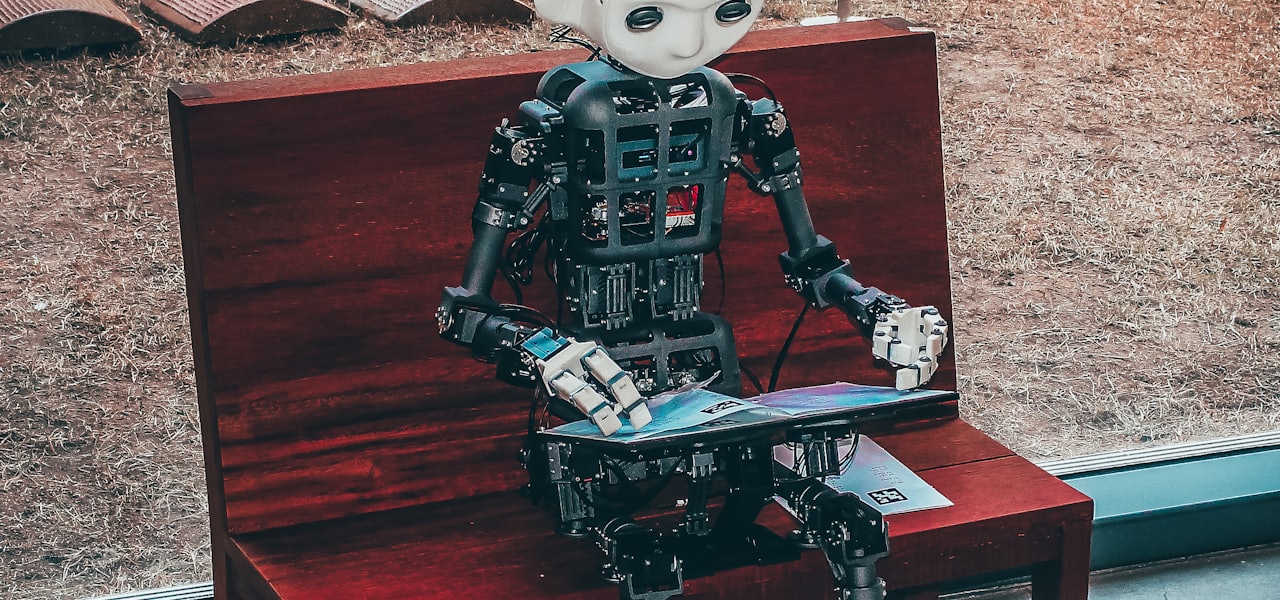
    Anthrobotics is the science of developing and studying robots that are either entirely or in some way human-like. The term anthrobotics was originally coined by Mark Rosheim in a paper entitled "Design of An Omnidirectional Arm" presented at the IEEE International Conference on Robotics and Automation, May 13–18, 1990, pp. 2162–2167. Rosheim says he derived the term from "...Anthropomorphic and Robotics to distinguish the new generation of dexterous robots from its simple industrial robot forebears." The word gained wider recognition as a result of its use in the title of Rosheim's subsequent book Robot Evolution: The Development of Anthrobotics, which focussed on facsimiles of human physical and psychological skills and attributes. However, a wider definition of the term anthrobotics has been proposed, in which the meaning is derived from anthropology rather than anthropomorphic. This usage includes robots that respond to input in a human-like fashion, rather than simply mimicking human actions, thus theoretically being able to respond more flexibly or to adapt to unforeseen circumstances. This expanded definition also encompasses robots that are situated in social environments with the ability to respond to those environments appropriately, such as insect robots, robotic pets, and the like. Anthrobotics is now taught at some universities, encouraging students not only to design and build robots for environments beyond current industrial applications, but also to speculate on the future of robotics that are embedded in the world at large, as mobile phones and computers are today. In 2016 philosopher Luis de Miranda created the Anthrobotics Cluster at the University of Edinburgh "a platform of cross-disciplinary research that seeks to investigate some of the biggest questions that will need to be answered" on the relationship between humans, robots and intelligent systems and "a think tank on the social spread of robotics, and also how automation is part of the definition of what humans have always been". to explore the symbiotic relationship between humans and automated protocols.

    Read more →
  • Deep Learning Anti-Aliasing

    Deep Learning Anti-Aliasing

    Deep Learning Anti-Aliasing (DLAA) is a form of spatial anti-aliasing developed by Nvidia. DLAA depends on and requires Tensor Cores available in Nvidia RTX cards. DLAA is similar to Deep Learning Super Sampling (DLSS) in its anti-aliasing method, with one important differentiation being that the goal of DLSS is to increase performance at the cost of image quality, whereas the main priority of DLAA is improving image quality at the cost of performance (irrelevant of resolution upscaling or downscaling). DLAA is similar to temporal anti-aliasing (TAA) in that they are both spatial anti-aliasing solutions relying on past frame data. Compared to TAA, DLAA is substantially better when it comes to shimmering, flickering, and handling small meshes like wires. == Technical overview == DLAA collects game rendering data including raw low-resolution input, motion vectors, depth buffers, and exposure information. This information feeds into a convolutional neural network that processes the image to reduce aliasing while preserving fine detail. The neural network architecture employs an auto-encoder design trained on high-quality reference images. The training dataset includes diverse scenarios focusing on challenging cases like sub-pixel details, high-contrast edges, and transparent surfaces. The network then processes frames in real-time. Unlike traditional anti-aliasing solutions that rely on manually written heuristics, such as TAA, DLAA uses its neural network to preserve fine details while eliminating unwanted visual artifacts. == History == DLAA was initially called and marketed by Nvidia as DLSS 2x. The first game that added support for DLAA was The Elder Scrolls Online, which implemented the feature in 2021. By June 2022, DLAA was only available in six games. This number rose to 17 by February 2023. In June 2023, TechPowerUp reported that "DLAA is seeing sluggish adoption among game developers", and that Nvidia was working on adding DLAA to the quality presets of DLSS to boost adoption. By December 2023, DLAA was supported in 41 games. In early 2025, an update for the Nvidia App added a driver-based DLSS override feature that enables users to activate DLAA even in games that do not support it natively. == Differences between TAA and DLAA == TAA is used in many modern video games and game engines; however, all previous implementations have used some form of manually written heuristics to prevent temporal artifacts such as ghosting and flickering. One example of this is neighborhood clamping which forcefully prevents samples collected in previous frames from deviating too much compared to nearby pixels in newer frames. This helps to identify and fix many temporal artifacts, but deliberately removing fine details in this way is analogous to applying a blur filter, and thus the final image can appear blurry when using this method. DLAA uses an auto-encoder convolutional neural network trained to identify and fix temporal artifacts, instead of manually programmed heuristics as mentioned above. Because of this, DLAA can generally resolve detail better than other TAA and TAAU implementations, while also removing most temporal artifacts. == Differences between DLSS and DLAA == While DLSS handles upscaling with a focus on performance, DLAA handles anti-aliasing with a focus on visual quality. DLAA runs at the given screen resolution with no upscaling or downscaling functionality provided by DLAA. DLSS and DLAA share the same AI-driven anti-aliasing method. As such, DLAA functions like DLSS without the upscaling part. Both are made by Nvidia and require Tensor Cores. However, DLSS and DLAA cannot be enabled at the same time, only one can be selected depending on whether performance or image quality is prioritized. == Reception == TechPowerUp found that "[c]ompared to TAA and DLSS, DLAA is clearly producing the best image quality, especially at lower resolutions", arguing that, while "DLSS was already doing a better job than TAA at reconstructing small objects", "DLAA does an even better job". In a Cyberpunk 2077 performance test, IGN stated that "DLAA provided somewhat similar results [FPS wise] to the normal raster mode in most cases but got significant performance boost with the help of frame generation", a feature not available when using native resolution. Rock Paper Shotgun noted that, while DLAA is "not a completely perfect form of anti-aliasing, as the occasional jaggies are present", it "looks a lot sharper overall [than TAA], and especially in motion." According to PC World, "DLAA offers very good anti-aliasing without losing visual information — alternatives like TAA tend to struggle during motion-filled scenes, where DLAA doesn’t. Furthermore, DLAA’s loss of performance is lower than with conventional anti-aliasing methods."

    Read more →
  • Polynomial texture mapping

    Polynomial texture mapping

    Polynomial texture mapping (PTM), also known as Reflectance Transformation Imaging (RTI), is a technique of imaging and interactively displaying objects under varying lighting conditions to reveal surface phenomena. The data acquisition method is single camera multi light (SCML). == Origins == The method was originally developed by Tom Malzbender of HP Labs in order to generate enhanced 3D computer graphics and it has since been adopted for cultural heritage applications. == Methodology == A series of images is captured in a darkened environment with the camera in a fixed position and the object lit from different angles (Single Camera Multi Light). Interactive software processes and combines the set of images to enable the user inspecting the object to control a virtual light source. The virtual light source may be manipulated to simulate light from different angles and of different intensity or wavelengths to illuminate the surface of artefacts and reveal details. Open-source tools for processing the captured images and publishing the resulting relightable images on the web are freely available. == Applications == Polynomial texture mapping may be used for detailed recording and documentation, 3D modeling, edge detection, and to aid the study of inscriptions, rock art and other artefacts. It has been applied to hundreds of the Vindolanda tablets by the Centre for the Study of Ancient Documents at the University of Oxford in conjunction with the British Museum. It has also been deployed, by Ben Altshuler of the Institute for Digital Archaeology, to scan the Philae obelisk at Kingston Lacy and the Parian Chronicle at the Ashmolean Museum; in both cases scans revealed significant, previously illegible text. Method was also used for identifying microscopic worked antler from Star Carr and recording ancient rock art in Armenia. A 'dome' supporting twenty-four lights has been used to image paintings in the National Gallery and produce polynomial texture maps, providing information on condition phenomena for conservation purposes. Studies of the technique at the National Gallery and Tate concluded that it is an effective tool for documenting changes in the condition of paintings, more easily repeatable than raking light photography, and therefore could be used to assess paintings during structural treatment and before and after loan. Twelve dome-based systems built by the University of Southampton have been used to capture thousands of cuneiform tablets at various museums. The technique is now also finding uses in the field of forensic science, for example in imaging footprints, tyre marks, and indented writing.

    Read more →
  • Qlone

    Qlone

    Qlone is a 3D scanning app based on photogrammetry for creation of 3D models on mobile devices. The resultant 3D models can be exported for external use. Qlone was featured at the Apple Worldwide Developers Conference in 2021. It was also featured on BBC Click. == Qlone features == === 3D scanning === 3D scanning with Qlone requires the use of an included mat design. The user prints the mat onto a sheet of paper, then places the object to be scanned in the centre of the mat. An augmented reality dome within the Qlone app guides the user through the subsequent scanning process. The iOS version of Qlone allows scanning without the mat. === 3D editing === Qlone's editing features allow users to adjust 3D scanned models using texture mapping, polygon mesh size simplification, digital sculpting, cleaning and smoothing, and artistic effects. === File export === Qlone exports directly to multiple 3D platforms including SketchFab, i.materialise, Lens Studio for Snapchat, Shapeways and CGTrader. Models can also be exported in different 3D formats for use in other 3D tools – OBJ, STL, FBX, USDZ, GLB (Binary gLTF), PLY, and X3D. == Use in Science, Education and Academia == Due to its inexpensive, simple and accessible nature for creating 3D models, Qlone was used in many academically educational and scientific research projects. The European Space Agency used Qlone to scan rocks in a Tele-Robotic rock collection experiment. Neurosurgeons from the University of Southern California and surgeons from Tulane University School of Medicine used Qlone to create 3D models of cadaveric specimens and anatomical models with the aim of increasing access to such components for enhancing anatomy training and allowing realistic surgical simulations for neurosurgeons and practitioners worldwide. Archaeologists from Texas A&M University used Qlone to create 3D replicas of artifacts and models and students from Vancouver iTech Preparatory Middle School used Qlone to create 3D scans of more than 100 artifacts from Fort Vancouver National Historic Site.

    Read more →