AI News and Guides

Explore the best AI News and Guides — independent reviews, comparisons, pricing and step-by-step how-to guides, curated by Aizhi.

  • GCube system

    GCube system

    gCube is an open source software system specifically designed and developed to enact the building and operation of a Data Infrastructure providing their users with a rich array of services suitable for supporting the co-creation of Virtual Research Environments and promoting the implementation of open science workflows and practices. It is at the heart of the D4Science Data Infrastructure. == Overview == It is primarily organised in a number of web service called to offer functionality supporting the phases of knowledge production and sharing. In addition, it consists of a set of software libraries supporting service development, service-to-service integration, and service capabilities extension, and a set of portlets dedicated to realise user interface constituents facilitating the exploitation of one or more services. It is designed and conceived to enact system of systems. In fact, its gCube services rely on standards and mediators to interact with other services as well as are made available by standard and APIs to make it possible for clients to use them. For instance, the DataMiner service implements the Web Processing Service protocol to facilitate clients to execute processes. The set of components dealing with Identity and Access Management rely on Keycloak and federates other IDMs thus making the overall Authentication and the Authorization management compliant with open standards such as OAuth2, User-Managed Access (UMA), and OpenID Connect (OIDC)protocols. The Catalogue relies on DCAT, OAI-PMH, and Catalogue Service for the Web to collect contents from other catalogues and data sources and offers its content by DCAT, OAI-PMH, and a proprietary REST API (gCat REST API). Its Continuous Integration/Continuous Delivery pipeline implemented by Jenkins represents an innovative approach to software delivering conceived to be scalable and easy to maintain and upgrade at a minimal cost. == History == gCube has been developed in the context of the D4Science initiative with the support of several EU projects.

    Read more →
  • Retained mode

    Retained mode

    Retained mode in computer graphics is a major pattern of API design in graphics libraries, in which the graphics library, instead of the client, retains the scene (complete object model of the rendering primitives) to be rendered and the client calls into the graphics library do not directly cause actual rendering, but make use of extensive indirection to resources, managed – thus retained – by the graphics library. It does not preclude the use of double-buffering. Immediate mode is an alternative approach. Historically, retained mode has been the dominant style in GUI libraries; however, both can coexist in the same library and are not necessarily exclusionary in practice. == Overview == In retained mode the client calls do not directly cause actual rendering, but instead update an abstract internal model (typically a list of objects) which is maintained within the library's data space. This allows the library to optimize when actual rendering takes place along with the processing of related objects. Some techniques to optimize rendering include: managing double buffering treatment of hidden surfaces by backface culling/occlusion culling (Z-buffering) only transferring data that has changed from one frame to the next from the application to the library Example of coexistence with immediate mode in the same library is OpenGL. OpenGL has immediate mode functions that can use previously defined server side objects (textures, vertex buffers and index buffers, shaders, etc.) without resending unchanged data. Examples of retained mode rendering systems include Windows Presentation Foundation, SceneKit on macOS, and PHIGS.

    Read more →
  • TalkBack

    TalkBack

    TalkBack is an accessibility service for the Android operating system that helps blind and visually impaired users to interact with their devices. It uses spoken words, vibration and other audible feedback to allow the user to know what is happening on the screen allowing the user to better interact with their device. The service is pre-installed on many Android devices, and it became part of the Android Accessibility Suite in 2017. According to the Google Play Store, the Android Accessibility Suite has been downloaded over five billion times, including devices that have the suite preinstalled. == Open-source == Google releases the source code of TalkBack with some releases of the accessibility service to GitHub, with the latest of these changes being from May 6, 2021. The source for these versions of Google TalkBack have been released under the Apache License version 2.0. == Release history ==

    Read more →
  • Telebirr

    Telebirr

    Telebirr (Amharic: ቴሌብር) is a mobile payment service developed and was launched by Ethio telecom, the state owned telecommunication and Internet service provider in Ethiopia. It took five months to develop the end-to-end service. It facilitates the delivery of cashless transactions. The platform deployed currently has the capacity of processing up to 100 transactions per second (TPS) and can be scaled up to 1000 TPS. The service is accessible via SMS, USSD, and smartphone applications. Telebirr works in five languages. == Services == Though the service is fully accessible for any customer of Ethio telecom, the users need to register through the mobile application called Telebirr or using an authorized agent or Ethio telecom shop or Unstructured Supplementary Service Data (USSD), 127# nationally. However, Telebirr also provides a “quick registration” by using any information that already exists in Ethio telecom's system.

    Read more →
  • Contract management software

    Contract management software

    Contract management software constitutes software and associated data management used to support contract management, contract lifecycle management, and contractor management on projects in the procurement of goods and services. It may be used together with project management software. == History == Historically, contract management was seen as a "paper-intensive" process. Early steps from the early 2000's reported by the Aberdeen Group required extensive data conversion work to enable documents to be handled electronically. With the adoption of the European Union's General Data Protection Regulation (GDPR) in 2016, companies needed to take additional steps in regards to contract management. Each data responsible entity was obliged to sign data processing agreements (DPAs) with the various vendors, who treat personal data on behalf of the data responsible. DPAs need to be regularly controlled, adjusted and renewed, which adds an extra agreement to such vendors or at least an extra DPA addendum to each agreement. By 2018, Ardent Partner's research had found that software used for automating contract management activities was being more extensively used among major companies or businesses with "Best-in-Class" procurement teams. Contract management process automation was found to be closely linked with more effective internal business collaboration, standardization and risk management. == Advantages and key functions == Using contract management software can have multiple benefits compared to manually managing paper contracts. This software can help keep track of multiple activities and can have features for automating administration, ensuring compliance, monitoring risk, running reports and triggering alerts. In addition to these types of features, contract management software systems provide a centralized repository for employees to quickly access all contracts worldwide in one place. Contract management software is produced by many companies, working on a range of scales and offering varying degrees of customizability. Basic functions should include the ability to store contract documents, track changes to contract documents, search documents for a particular criterion, send key date alerts and to report required aspects of the contract. Other functions include managing a new contract request, capturing related data, following a document through a review and approval process, and collecting digital signatures. Contract management software may also be an aid to project portfolio management and spend analysis, and may also monitor KPIs. Leading contract management software provides contract visibility, monitoring, and compliance to automate and streamline the contract lifecycle process. Contract management software which uses artificial intelligence (AI) can identify contract types based on pattern recognition. AI contracting software trains its algorithms on a set of contract data to recognize patterns and extract variables such as clauses, dates, and parties. It also offers simple prediction capabilities, by sorting through a large volume of contracts and flagging individual contracts based on specified criteria. AI software can also read contracts in multiple formats and languages, extract contract data, and provide analytics. It can reduce the risk of human error in contract drafting and review. A centralized repository provides a critical advantage allowing for all contract documents to be stored within one location. Having contracts stored in multiple locations can delay and interrupt the contracting process. == Contract risk management software (CRMS) for capital projects == Very large enterprises, such as capital expenditure (capex) projects, involve multiple parties and high risk and uncertainty. They are unlike traditional operating contracts in that they are subject to shared deadlines in unique situations. As the complexity of these unique projects increases, the relationships between parties become more important. This requires contract management software, or contract risk management software (CRMS), to become more dynamic and responsive. The terms of these capex contracts necessarily involve assumptions at the start of the process and are likely to change over the lifetime of the project lifecycle. For this reason, CRMS must be capable of recording one single instance of agreed changes to contract terms and incorporating these changes in an auditable and legally robust way. With multiple decision makers involved, CRMS should also make accountability more transparent and enable faster decisions about variation proposals.

    Read more →
  • Shape table

    Shape table

    Shape tables are a feature of the Apple II ROMs which allows for manipulation of small images encoded as a series of vectors. An image (or shape) can be drawn in the high-resolution graphics mode—with scaling and rotation—via software routines in the ROM. Shape tables are supported via Applesoft BASIC and from machine code in the "Programmer's Aid" package that was bundled with the original Integer BASIC ROMs for that computer. Applesoft's high-resolution graphics routines were not optimized for speed, so shape tables were not typically used for performance-critical software such as games, which were typically written in assembly language and used pre-shifted bitmap shapes. Shape tables were used primarily for static shapes and sometimes for fancy text; Beagle Bros offered a number of fonts in Font Mechanic as Applesoft shape tables. == Technical details == The vectors of a two-dimensional graphic, each encoding a direction from the previous pixel along with a flag indicating whether the new pixel should be illuminated or not, were encoded up to three in a byte. These were stored in a table via the Monitor or the POKE command. From there, the graphic could be referenced by number (a table could contain up to 255 shapes), and built-in Applesoft routines permitted scaling, rotating, and drawing or erasing the shape. An XOR mode was also available to allow the shape to be visible on any color background; this had the advantage, also, of allowing the shape to be easily erased by redrawing it. Apple did not provide any utilities for creating shape tables; they had to be created by hand, usually by plotting on graph paper, then calculating the hexadecimal values and entering them into the computer. Beagle Bros created a shape table editing program, which eliminated the "number crunching", called Apple Mechanic, and a related program, Font Mechanic.

    Read more →
  • Database dump

    Database dump

    A database dump contains a record of the table structure and/or the data from a database and is usually in the form of a list of SQL statements ("SQL dump"). A database dump is most often used for backing up a database so that its contents can be restored in the event of data loss. Corrupted databases can often be recovered by analysis of the dump. Database dumps are often published by free content projects, to facilitate reuse, forking, offline use, and long-term digital preservation. Dumps can be transported into environments with Internet blackouts or otherwise restricted Internet access, as well as facilitate local searching of the database using sophisticated tools such as grep.

    Read more →
  • Spyglass (app)

    Spyglass (app)

    Spyglass is a navigation and orientation mobile application developed by Pavel Ahafonau. It combines data from a digital compass, GNSS positioning, motion sensors, maps, and the device camera to provide direction finding, waypoint navigation, and measurement tools. The application is designed for offline and off-road use and is used in outdoor navigation, orientation tasks, astronomy, and fieldwork. == History == Spyglass was created by independent software developer Pavel Ahafonau as a personal project in 2009, following the introduction of a digital compass sensor in the iPhone. It initially focused on combining compass, GPS, and camera data into an augmented-reality tool for navigation and orientation. In September 2009, a public prototype was demonstrated, showing a live camera view combined with a digital compass overlay aligned to device orientation, presenting an early augmented-reality, location-aware heads-up display. The application was released on the Apple App Store in October 2009. In February 2010, a major update introduced target-based navigation, allowing users to navigate to saved locations, bearings, and selected celestial objects. The update also added visual measurement tools, including an optical-style rangefinder, as well as a vertical speed indicator displaying ascent and descent rates derived from device sensor data. In December 2010, Spyglass was featured by Apple in iTunes Rewind 2010 under augmented-reality applications. The application expanded to Android on 28 October 2017. In May 2021, Spyglass expanded its offline mapping capabilities by adding support for additional map styles by Thunderforest, extending the range of available cartographic themes for offline use. Also in 2021, navigation satellite tracking was introduced, allowing visualization and tracking of major GPS/GNSS satellite constellations. In 2022, a searchable offline database of major locations was added, including airports, seaports, mountains, castles, and landmarks, along with nearest-airport tracking functionality. In July 2024, previously separate iOS editions (Spyglass, Commander Compass, and Commander Compass Go) were consolidated into a single Spyglass application. At the same time, the app transitioned to a freemium model. == Features == Spyglass provides navigation and orientation functions by combining sensor data from the device. Core functionality includes a digital compass, GNSS-based positioning, waypoint creation and tracking, and map-based navigation with offline support. The application includes an augmented-reality viewfinder mode that overlays navigation and sensor information onto the live camera view. Displayed data may include heading, bearing, distance to targets, pitch, roll, yaw, altitude, speed, and estimated time of arrival. Additional tools include an altimeter, speedometer, vertical speed indicator, inclinometer, artificial horizon, coordinate conversion utilities, optical rangefinding, and angular measurement tools. Spyglass also supports celestial navigation features, such as tracking of the Sun, Moon, stars, and global navigation satellite systems. Spyglass uses data from the device's GNSS receiver, digital compass, gyroscope, accelerometer, barometer (when available), and camera. Sensor data are combined to calculate position, orientation, movement, and measurement overlays. The application is designed to function without an internet connection. Navigation tools, sensor readings, waypoint tracking, augmented-reality features, celestial tracking, and the built-in location database operate offline. Internet access is required only for loading online map tiles; previously downloaded offline maps remain available without connectivity.

    Read more →
  • Intelligent decision support system

    Intelligent decision support system

    An intelligent decision support system (IDSS) is a decision support system that makes extensive use of artificial intelligence (AI) techniques. Use of AI techniques in management information systems has a long history – indeed terms such as "Knowledge-based systems" (KBS) and "intelligent systems" have been used since the early 1980s to describe components of management systems, but the term "Intelligent decision support system" is thought to originate with Clyde Holsapple and Andrew Whinston in the late 1970s. Examples of specialized intelligent decision support systems include Flexible manufacturing systems (FMS), intelligent marketing decision support systems and medical diagnosis systems. Ideally, an intelligent decision support system should behave like a human consultant: supporting decision makers by gathering and analysing evidence, identifying and diagnosing problems, proposing possible courses of action and evaluating such proposed actions. The aim of the AI techniques embedded in an intelligent decision support system is to enable these tasks to be performed by a computer, while emulating human capabilities as closely as possible. Many IDSS implementations are based on expert systems, a well established type of KBS that encode knowledge and emulate the cognitive behaviours of human experts using predicate logic rules, and have been shown to perform better than the original human experts in some circumstances. Expert systems emerged as practical applications in the 1980s based on research in artificial intelligence performed during the late 1960s and early 1970s. They typically combine knowledge of a particular application domain with an inference capability to enable the system to propose decisions or diagnoses. Accuracy and consistency can be comparable to (or even exceed) that of human experts when the decision parameters are well known (e.g. if a common disease is being diagnosed), but performance can be poor when novel or uncertain circumstances arise. Research in AI focused on enabling systems to respond to novelty and uncertainty in more flexible ways is starting to be used in IDSS. For example, intelligent agents that perform complex cognitive tasks without any need for human intervention have been used in a range of decision support applications. Capabilities of these intelligent agents include knowledge sharing, machine learning, data mining, and automated inference. A range of AI techniques such as case based reasoning, rough sets and fuzzy logic have also been used to enable decision support systems to perform better in uncertain conditions. A 2009 research about a multi-artificial system intelligence system named IILS is proposed to automate problem-solving processes within the logistics industry. The system involves integrating intelligence modules based on case-based reasoning, multi-agent systems, fuzzy logic, and artificial neural networks aiming to offer advanced logistics solutions and support in making well-informed, high-quality decisions to address a wide range of customer needs and challenges.

    Read more →
  • IMPACT (computer graphics)

    IMPACT (computer graphics)

    IMPACT (sometimes spelled Impact) is a computer graphics architecture for Silicon Graphics computer workstations. IMPACT Graphics was developed in 1995 and was available as a high-end graphics option on workstations released during the mid-1990s. IMPACT graphics gives the workstation real-time 2D and 3D graphics rendering capability similar to that of even high-end PCs made well after IMPACT's introduction. IMPACT graphics systems consist of either one or two Geometry Engines and one or two Raster Engines in various configurations. IMPACT graphics consists of five graphics subsystems: the Command Engine, Geometry Subsystem, Raster Engine, framebuffer and Display Subsystem. IMPACT Graphics can produce resolutions up to 1600 x 1200 pixels with 32-bit color and can also process unencoded NTSC and PAL analog television signals. IMPACT graphics subsystems come in three configurations for SGI Indigo2 IMPACT workstations: Solid IMPACT, High IMPACT, and Maximum IMPACT. The equivalent configurations also exist for the SGI Octane workstation but are referred to as SI, SSI, and MXI (I-series). Later Octane workstations used a similar configuration but with updated ASIC chips and are referred to as SE, SSE, and MXE (E-series). IMPACT uses Rambus RDRAM for texture memory. The IMPACT graphics architecture was superseded by SGI's VPro graphics architecture in 1997.

    Read more →
  • Webull

    Webull

    Webull Corporation, often stylized as simply Webull, is a U.S.-based financial services holding company headquartered in St. Petersburg, Florida. It owns and operates the Webull electronic trading platform for self-directed retail investors. Depending on jurisdiction, the Webull platform offers trading in stocks, exchange-traded funds (ETFs), options, margin, bonds, cryptocurrency and futures, as well as market-data tools. Webull began operations in 2016 under Hunan Fumi Information Technology, a China-based financial technology company founded by Wang Anquan. It launched U.S. brokerage services through Webull Financial LLC in 2018 and expanded during the retail-trading boom of 2020 and 2021. In April 2025, Webull became a publicly traded company on the Nasdaq through a merger with special-purpose acquisition company SK Growth Opportunities Corporation. The company's U.S. brokerage revenue relies substantially on payment for order flow, with options trading accounting for the larger share of its order-flow rebates in 2025. Webull has faced regulatory actions related to options customer approvals, complaint handling, suspicious activity reporting, social-media marketing and customer disclosures. It has also faced scrutiny from U.S. lawmakers and state officials over its historical and operational ties to China and the handling of U.S. customer data. == History == === Founding === Webull was founded in 2016 under Hunan Fumi Information Technology, a China-based financial technology company, by Wang Anquan, a former employee of Alibaba Group and Xiaomi. Hunan Fumi Information Technology received backing from Xiaomi, Shunwei Capital, and other investors in China. Fumi Technology was a Hunan-based fintech start-up incubated by Xiaomi and raised about CNY200 million (approximately US$30 million) in a Series B financing round in 2018. On May 24, 2017, Webull Financial LLC was established as a Delaware limited liability company. It began offering brokerage services in the United States in May 2018. Wang hired Anthony Denier as CEO of the U.S. brokerage that year and the two mapped out their strategy on napkins at a Mexican restaurant in New York City. Webull Corporation was incorporated in the Cayman Islands in September 2019 as the group's holding company. === Retail trading boom === In May 2020, the company received SEC approval to launch a robo-advisor on its platform. By August 2020, the platform had over 11 million registered users, and in October 2020, it had 750,000 daily active users. Webull introduced options trading in 2020 and later added cryptocurrency trading through a separate digital-asset business. In November 2020, Webull began supporting cryptocurrency transactions. In December 2020, Webull launched trading services in Hong Kong. During the GameStop short squeeze in January 2021, Webull gained attention as some retail traders looked for alternatives to Robinhood. On January 27, 2021, Webull recorded its highest-ever number of active daily users, at 952,000, and the Webull app was downloaded across the Apple App and Google Play stores an estimated 100,000 times. That week, approximately 1.2 million people downloaded the Webull mobile app, which the company reported as a 1,548% week-over-week increase. On January 28, 2021, Webull was directed by its clearing house to temporarily halt buy orders for stocks affected by the GameStop short squeeze. In June 2021, Webull was reported to be considering a U.S. initial public offering that could raise up to $400 million. === Restructuring and expansion === Webull restructured its China-related corporate arrangements in 2022 and later stated that Hunan Fumi was no longer affiliated with the group. In 2022 and 2023, Webull expanded in several non-U.S. markets, including Singapore, Australia, South Africa, Japan, the United Kingdom and Indonesia. In June 2023, Webull moved cryptocurrency trading to a separate app called Webull Pay. By the end of 2023, Webull had 4.3 million funded accounts and US$8.2 billion in customer assets. In January 2024, Anthony Denier was promoted to group president of Webull Corporation. In November 2024, Webull launched overnight, or extended-hours, trading, expanding the trading window of U.S. stocks for users inside and outside the United States. === SPAC merger and Nasdaq listing === On February 28, 2024, Webull agreed to go public through a business combination with SK Growth Opportunities Corporation (NASDAQ: SKGR), a special-purpose acquisition company, in a deal that valued the company at approximately US$7.3 billion. The proposed valuation drew scrutiny because of Webull's limited financial disclosure at announcement, reliance on payment for order flow and small expected public float. SK Growth shareholders approved the business combination on March 30, 2025, and the transaction closed on April 10, 2025. Webull's Class A ordinary shares and warrants began trading on the Nasdaq on April 11, 2025 under the ticker symbols BULL and BULLW (incentive warrants traded under BULLZ until their redemption in June 2025). The merger brought Webull to the public market but generated little cash for the company: after shareholder redemptions, Webull disclosed net proceeds of US$430,066 from the transaction. After the listing, Webull's shares experienced extreme volatility, rising as much as 500% to US$79.56 on April 14, 2025, after closing at US$13.25 on the prior trading day. The initial post-listing surge increased the value of Webull holdings owned by earlier investors, including RIT Capital Partners, which had first invested in Webull in 2021. In April 2026, after Webull's shares had fallen about 70% over the previous year, the company authorized a US$100 million share repurchase program. == Business model and financials == Webull provides a self-directed electronic trading platform available through mobile, desktop and web applications. Depending on jurisdiction, the platform offers trading in stocks, exchange-traded funds, options, margin, futures, fixed income products, cryptocurrency, cash management features and market data tools. In the United States, Webull Financial LLC is a registered broker-dealer and member of FINRA and the Securities Investor Protection Corporation, while Webull operates in other markets through locally licensed brokerage subsidiaries. Webull operates a commission-free or low-cost brokerage model for self-directed retail investors. In the United States, a substantial part of its trading-related revenue comes from payment for order flow, while in some non-U.S. markets the company more commonly charges commissions directly to customers. The platform is aimed at more active retail investors, including users seeking options tools, extended-hours trading and real-time market data. For 2025, Webull reported total revenue of US$571.0 million, up from US$390.2 million in 2024. Equity and option order-flow rebates accounted for US$304.1 million, or 53.3% of revenue, making order-flow rebates the company's largest reported revenue category. Interest-related income accounted for US$154.3 million, handling charge income for US$87.3 million and other revenue for US$25.3 million. Options were the larger component of the company's order-flow rebates in 2025, generating US$210.0 million compared with US$94.2 million from equities. Webull also generates revenue from interest-related activities, including margin financing, customer bank deposits, stock lending and corporate bank deposits. The company has stated that its interest-related income is affected by interest rates, customer cash balances, margin balances and demand for stock lending. The company had approximately 20 million registered users worldwide as of February 2024. As of December 31, 2025, it reported 26.8 million registered users, 5.0 million funded accounts and US$24.6 billion in customer assets. As of March 2025, Webull operated in Hong Kong, Singapore, Australia, South Africa, Japan, the United Kingdom, the United States, Indonesia, Canada, Brazil, Thailand, Malaysia and Mexico. == Marketing and sponsorships == Webull has used paid digital advertising, referral incentives, free-stock promotions, affiliate marketing and sports sponsorships to acquire customers and promote its brand. In its 2025 annual filing, the company reported marketing and branding expenses of US$152.3 million in 2023, US$138.7 million in 2024 and US$135.9 million in 2025. Webull said most of its advertising and promotion costs were related to paid search and paid social advertising, and that it had reduced free-stock promotions while shifting toward deposit- and asset-transfer-based incentives. In September 2021, BSE Global, the parent company of the Brooklyn Nets and New York Liberty, entered into a global multi-year agreement with Webull. Under the agreement, Webull became an official sponsor and online brokerage partner of the teams, with branding that included a jersey patch on Brooklyn Nets uniforms. Spo

    Read more →
  • Zero-knowledge service

    Zero-knowledge service

    In cloud computing, the term zero-knowledge (or occasionally no-knowledge or zero-access) is a commonly used term for online services that store, transfer or manipulate data with a high level of confidentiality, where the data is only accessible to the data's owner (the client), and not to the service provider. However, unlike "end-to-end encryption", the term "zero-knowledge" does not imply any specific threat model or security notion, and its use is commonly frowned-upon by the security community. The term "zero-knowledge" was popularized by backup service SpiderOak, which later switched to using the term "no knowledge", acknowledging that the previous terminology was not technically accurate. == Disadvantages == Most cloud storage services keep a copy of the client's password on their servers, allowing clients who have lost their passwords to retrieve and decrypt their data using alternative means of authentication; but since zero-knowledge services do not store copies of clients' passwords, if a client loses their password then their data cannot be decrypted, making it practically unrecoverable. Most of the most used cloud storage services, such as Google Drive, Dropbox, OneDrive or iCloud, are also able to furnish access requests from law enforcement agencies for similar reasons; zero-knowledge services, however, are unable to do so, since their systems are designed to make clients' data inaccessible without the client's explicit cooperation.

    Read more →
  • Embodied cognitive science

    Embodied cognitive science

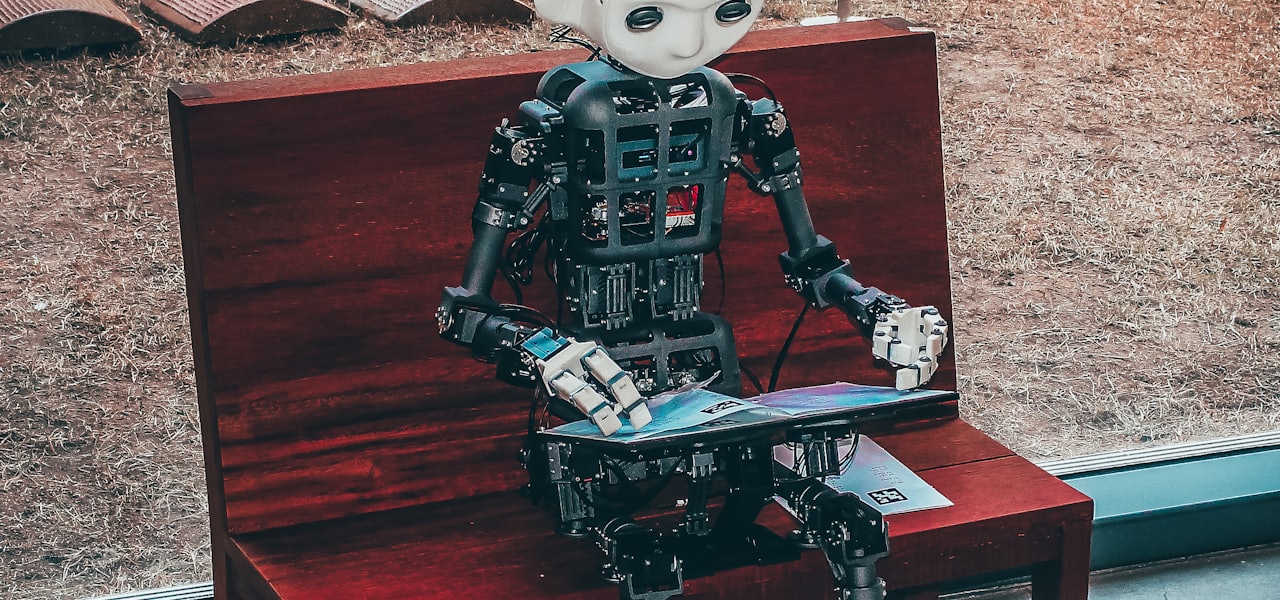
    Embodied cognitive science is an interdisciplinary field of research, the aim of which is to explain the mechanisms underlying intelligent behavior. It comprises three main methodologies: the modeling of psychological and biological systems in a holistic manner that considers the mind and body as a single entity; the formation of a common set of general principles of intelligent behavior; and the experimental use of robotic agents in controlled environments. == Contributors == Embodied cognitive science borrows heavily from embodied philosophy and the related research fields of cognitive science, psychology, neuroscience and artificial intelligence. Contributors to the field include: From the perspective of neuroscience, Gerald Edelman of the Neurosciences Institute at La Jolla, Francisco Varela of CNRS in France, and J. A. Scott Kelso of Florida Atlantic University From the perspective of psychology, Lawrence Barsalou, Michael Turvey, Vittorio Guidano and Eleanor Rosch From the perspective of linguistics, Gilles Fauconnier, George Lakoff, Mark Johnson, Leonard Talmy and Mark Turner From the perspective of language acquisition, Eric Lenneberg and Philip Rubin at Haskins Laboratories From the perspective of anthropology, Edwin Hutchins, Bradd Shore, James Wertsch and Merlin Donald. From the perspective of autonomous agent design, early work is sometimes attributed to Rodney Brooks or Valentino Braitenberg From the perspective of artificial intelligence, Understanding Intelligence by Rolf Pfeifer and Christian Scheier or How the Body Shapes the Way We Think, by Rolf Pfeifer and Josh C. Bongard From the perspective of philosophy, Andy Clark, Dan Zahavi, Shaun Gallagher, and Evan Thompson In 1950, Alan Turing proposed that a machine may need a human-like body to think and speak: It can also be maintained that it is best to provide the machine with the best sense organs that money can buy, and then teach it to understand and speak English. That process could follow the normal teaching of a child. Things would be pointed out and named, etc. Again, I do not know what the right answer is, but I think both approaches should be tried. == Traditional cognitive theory == Embodied cognitive science is an alternative theory to cognition in which it minimizes appeals to computational theory of mind in favor of greater emphasis on how an organism's body determines how and what it thinks. Traditional cognitive theory is based mainly around symbol manipulation, in which certain inputs are fed into a processing unit that produces an output. These inputs follow certain rules of syntax, from which the processing unit finds semantic meaning. Thus, an appropriate output is produced. For example, a human's sensory organs are its input devices, and the stimuli obtained from the external environment are fed into the nervous system which serves as the processing unit. From here, the nervous system is able to read the sensory information because it follows a syntactic structure, thus an output is created. This output then creates bodily motions and brings forth behavior and cognition. Of particular note is that cognition is sealed away in the brain, meaning that mental cognition is cut off from the external world and is only possible by the input of sensory information. == The embodied cognitive approach == Embodied cognitive science differs from the traditionalist approach in that it denies the input-output system. This is chiefly due to the problems presented by the Homunculus argument, which concluded that semantic meaning could not be derived from symbols without some kind of inner interpretation. If some little man in a person's head interpreted incoming symbols, then who would interpret the little man's inputs? Because of the specter of an infinite regress, the traditionalist model began to seem less plausible. Thus, embodied cognitive science aims to avoid this problem by defining cognition in three ways. === Physical attributes of the body === The first aspect of embodied cognition examines the role of the physical body, particularly how its properties affect its ability to think. This part attempts to overcome the symbol manipulation component that is a feature of the traditionalist model. Depth perception, for instance, can be better explained under the embodied approach due to the sheer complexity of the action. Depth perception requires that the brain detect the disparate retinal images obtained by the distance of the two eyes. In addition, body and head cues complicate this further. When the head is turned in a given direction, objects in the foreground will appear to move against objects in the background. From this, it is said that some kind of visual processing is occurring without the need of any kind of symbol manipulation. This is because the objects appearing to move the foreground are simply appearing to move. This observation concludes then that depth can be perceived with no intermediate symbol manipulation necessary. A more poignant example exists through examining auditory perception. Generally speaking the greater the distance between the ears, the greater the possible auditory acuity. Also relevant is the amount of density in between the ears, for the strength of the frequency wave alters as it passes through a given medium. The brain's auditory system takes these factors into account as it process information, but again without any need for a symbolic manipulation system. This is because the distance between the ears for example does not need symbols to represent it. The distance itself creates the necessary opportunity for greater auditory acuity. The amount of density between the ears is similar, in that it is the actual amount itself that simply forms the opportunity for frequency alteration. Thus under consideration of the physical properties of the body, a symbolic system is unnecessary and an unhelpful metaphor. === The body's role in the cognitive process === The second aspect draws heavily from George Lakoff's and Mark Johnson's work on concepts. They argued that humans use metaphors whenever possible to better explain their external world. Humans also have a basic stock of concepts in which other concepts can be derived from. These basic concepts include spatial orientations such as up, down, front, and back. Humans can understand what these concepts mean because they can directly experience them from their own bodies. For example, because human movement revolves around standing erect and moving the body in an up-down motion, humans innately have these concepts of up and down. Lakoff and Johnson contend this is similar with other spatial orientations such as front and back too. As mentioned earlier, these basic stocks of spatial concepts are the basis in which other concepts are constructed. Happy and sad for instance are seen now as being up or down respectively. When someone says they are feeling down, what they are really saying is that they feel sad for example. Thus the point here is that true understanding of these concepts is contingent on whether one can have an understanding of the human body. So the argument goes that if one lacked a human body, they could not possibly know what up or down could mean, or how it could relate to emotional states. [I]magine a spherical being living outside of any gravitational field, with no knowledge or imagination of any other kind of experience. What could UP possibly mean to such a being? While this does not mean that such beings would be incapable of expressing emotions in other words, it does mean that they would express emotions differently from humans. Human concepts of happiness and sadness would be different because human would have different bodies. So then an organism's body directly affects how it can think, because it uses metaphors related to its body as the basis of concepts. === Interaction of local environment === A third component of the embodied approach looks at how agents use their immediate environment in cognitive processing. Meaning, the local environment is seen as an actual extension of the body's cognitive process. The example of a personal digital assistant (PDA) is used to better imagine this. Echoing functionalism (philosophy of mind), this point claims that mental states are individuated by their role in a much larger system. So under this premise, the information on a PDA is similar to the information stored in the brain. So then if one thinks information in the brain constitutes mental states, then it must follow that information in the PDA is a cognitive state too. Consider also the role of pen and paper in a complex multiplication problem. The pen and paper are so involved in the cognitive process of solving the problem that it seems ridiculous to say they are somehow different from the process, in very much the same way the PDA is used for information like the brain. Another example examines how humans control and manipulate their environment

    Read more →
  • Scrolling

    Scrolling

    In computer displays, filmmaking, television production, video games and other kinetic displays, scrolling is sliding text, images or video across a monitor or display, vertically or horizontally. "Scrolling," as such, does not change the layout of the text or pictures but moves (pans or tilts) the user's view across what is apparently a larger image that is not wholly seen. A common television and movie special effect is to scroll credits, while leaving the background stationary. Scrolling may take place completely without user intervention (as in film credits) or, on an interactive device, be triggered by touchscreen or a keypress and continue without further intervention until a further user action, or be entirely controlled by input devices. Scrolling may take place in discrete increments (perhaps one or a few lines of text at a time), or continuously (smooth scrolling). Frame rate is the speed at which an entire image is redisplayed. It is related to scrolling in that changes to text and image position can only happen as often as the image can be redisplayed. When frame rate is a limiting factor, one smooth scrolling technique is to blur images during movement that would otherwise appear to "jump". == Computing == === Implementation === Scrolling is often carried out on a computer by the CPU (software scrolling) or by a graphics processor. Some systems feature hardware scrolling, where an image may be offset as it is displayed, without any frame buffer manipulation (see also hardware windowing). This was especially common in 8 and 16bit video game consoles. === UI paradigms === In a WIMP-style graphical user interface (GUI), user-controlled scrolling is carried out by manipulating a scrollbar with a mouse, or using keyboard shortcuts, often the arrow keys. Scrolling is often supported by text user interfaces and command line interfaces. Older computer terminals changed the entire contents of the display one screenful ("page") at a time; this paging mode requires fewer resources than scrolling. Scrolling displays often also support page mode. Typically certain keys or key combinations page up or down; on PC-compatible keyboards the page up and page down keys or the space bar are used; earlier computers often used control key combinations. Some computer mice have a scroll wheel, which scrolls the display, often vertically, when rolled; others have scroll balls or tilt wheels which allow both vertical and horizontal scrolling. Some software supports other ways of scrolling. Adobe Reader has a mode identified by a small hand icon ("hand tool") on the document, which can then be dragged by clicking on it and moving the mouse as if sliding a large sheet of paper. When this feature is implemented on a touchscreen it is called kinetic scrolling. Touch-screens often use inertial scrolling, in which the scrolling motion of an object continues in a decaying fashion after release of the touch, simulating the appearance of an object with inertia. An early implementation of such behavior was in the "Star7" PDA of Sun Microsystems ca. 1991–1992. Scrolling can be controlled in other software-dependent ways by a PC mouse. Some scroll wheels can be pressed down, functioning like a button. Depending on the software, this allows both horizontal and vertical scrolling by dragging in the direction desired; when the mouse is moved to the original position, scrolling stops. A few scroll wheels can also be tilted, scrolling horizontally in one direction until released. On touchscreen devices, scrolling is a multi-touch gesture, done by swiping a finger on the screen vertically in the direction opposite to where the user wants to scroll to. If any content is too wide to fit on a display, horizontal scrolling is required to view all of it. In applications such as graphics and spreadsheets there is often more content than can fit either the width or the height of the screen at a comfortable scale, and scrolling in both directions is necessary. === Infinite scrolling === In contrast to material divided into discrete pages, the web design approach of infinite scrolling dynamically adds new material to the user display, leading to a continuous, apparently bottomless or endless scrolling experience. === Text === In languages written horizontally, such as most Western languages, text documents longer than will fit on the screen are often displayed wrapped and sized to fit the screen width, and scrolled vertically to bring desired content into view. It is possible to display lines too long to fit the display without wrapping, scrolling horizontally to view each entire line. However, this requires inconvenient constant line-by-line scrolling, while vertical scrolling is only needed after reading a full screenful. Software such as word processors and web browsers normally uses word-wrapping to display as many words in a single line as will fit the width of the screen or window or, for text organised in columns, each column. === Demos === Scrolling texts, also referred to as scrolltexts or scrollers, played an important part in the birth of the computer demo culture. The software crackers often used their deep knowledge of computer platforms to transform the information that accompanied their releases into crack intros. The sole role of these intros was to scroll the text on the screen in an impressive way. == Film and television == Scrolling is commonly used to display the credits at the end of films and television programs. Scrolling is often used in the form of a news ticker towards the bottom of the picture for content such as television news, scrolling sideways across the screen, delivering short-form content. In the dynamic layout of kinetic typography, scrolling typography can scroll across the flat screen, or can appear to recede or advance. An iconic example is the Star Wars opening crawl inspired by the Flash Gordon serials. == Video games == In computer and video games, scrolling of a playing field allows the player to control an object in a large contiguous area. Early examples of this method include Taito's 1974 vertical-scrolling racing video game Speed Race, Sega's 1976 forward-scrolling racing games Moto-Cross (Fonz) and Road Race, and Super Bug. Previously the flip-screen method was used to indicate moving backgrounds. The Namco Galaxian arcade system board introduced with Galaxian in 1979 pioneered a sprite system that animated pre-loaded sprites over a scrolling background, which became the basis for Nintendo's Radar Scope and Donkey Kong arcade hardware and home consoles such as the Nintendo Entertainment System. Parallax scrolling, which was first featured in Moon Patrol, involves several semi-transparent layers (called playfields), which scroll on top of each other at varying rates in order to give an early pseudo-3D illusion of depth. Belt scrolling is a method used in side-scrolling beat 'em up games with a downward camera angle where players can move up and down in addition to left and right. == Studies == A 1993 article by George Fitzmaurice studied spatially aware palmtop computers. These devices had a 3D sensor, and moving the device caused the contents to move as if the contents were fixed in place. This interaction could be referred to as “moving to scroll.” Also, if the user moved the device away from their body, they would zoom in; conversely, the device would zoom out if the user pulled the device closer to them. Smartphone cameras and “optical flow” image analysis utilize this technique nowadays. A 1996 research paper by Jun Rekimoto analyzed tilting operations as scrolling techniques on small screen interfaces. Users could not only tilt to scroll, but also tilt to select menu items. These techniques proved especially useful for field workers, since they only needed to hold and control the device with one hand. A study from 2013 by Selina Sharmin, Oleg Špakov, and Kari-Jouko Räihä explored the action of reading text on a screen while the text auto-scrolls based on the user's eye tracking patterns. The control group simply read text on a screen and manually scrolled. The study found that participants preferred to read primarily at the top of the screen, so the screen scrolled down whenever participants’ eyes began to look toward the bottom of the screen. This auto-scrolling caused no statistically significant difference in reading speed or performance. An undated study occurring during or after 2010 by Dede Frederick, James Mohler, Mihaela Vorvoreanu, and Ronald Glotzbach noted that parallax scrolling "may cause certain people to experience nausea."

    Read more →
  • Commission on Enhancing National Cybersecurity

    Commission on Enhancing National Cybersecurity

    The President's Commission on Enhancing National Cybersecurity is a Presidential Commission formed on April 13, 2016, to develop a plan for protecting cyberspace, and America's economic reliance on it. The commission released its final report in December 2016. The report made recommendations regarding the intertwining roles of the military, government administration and the private sector in providing cyber security. Chairman Donilon said of the report that its coverage "is unusual in the breadth of issues" with which it deals. == Recommendations == The report made sixteen major recommendations with fifty-three specific action items broadly grouped under six areas: Protecting the information and digital infrastructure Investing in the secure growth of information and digital infrastructure Consumer information access Building the cybersecurity workforce Building a secure governmental cybersecurity framework Keeping interconnectivity open, fair, competitive, and secure The Commission found that strong authentication systems were mandatory for adequate cybersecurity, not just for the government, but for all commercial systems, and private individuals. The commission also stressed remote identity proofing and security for the Internet of things (IoT). Finding that technicians who know cybersecurity and can protect systems are few and in short supply, the commission recommended nationally supported training programs to produce an adequate workforce, as well as increasing the level of expertise in the existing workforce. The Commission highlighted the importance of partnerships between government and the private sector as a powerful tool for encouraging the technology, policies and practices we need to secure and grow the digital economy. (page 2) Some criticised the commission's work as lacking an understanding of cybersecurity and not being cognizant of "cyber reality" and the cost of some of the action items, but others found the report constructive and meaningful. == Commission members == The initial members of the Commission are: Tom Donilon, former Assistant to the President and National Security Advisor (Chair) Sam Palmisano, former CEO of IBM (Vice Chair) General Keith Alexander, CEO of IronNet Cybersecurity, former Director of the National Security Agency and former Commander of U.S. Cyber Command Annie Antón, Professor and Chair of the School of Interactive Computing at Georgia Tech. Ajay Banga, President and CEO of MasterCard Steven Chabinsky, General Counsel and Chief Risk Officer of CrowdStrike Patrick Gallagher, Chancellor of the University of Pittsburgh and former Director of the National Institute of Standards and Technology Peter Lee, Corporate Vice President, Microsoft Research Herbert Lin, Senior Research Scholar for Cyber Policy and Security at the Stanford Center for International Security and Cooperation and Research Fellow at the Hoover Institution Heather Murren, former member of the Financial Crisis Inquiry Commission and co-founder of the Nevada Cancer Institute Joe Sullivan, Chief Security Officer of Uber and former Chief Security Officer of Facebook Maggie Wilderotter, Executive Chairman of Frontier Communications == Follow-on == Incoming President Trump has indicated that he wants a full review of U.S. cyber protection policy. == Notes and references ==

    Read more →