The universal portfolio algorithm is a portfolio selection algorithm from the field of machine learning and information theory. The algorithm learns adaptively from historical data and maximizes log-optimal growth rate in the long run, per the Kelly criterion. It was introduced by the late Stanford University information theorist Thomas M. Cover. The algorithm rebalances the portfolio at the beginning of each trading period. At the beginning of the first trading period it starts with a naive diversification. In the following trading periods the portfolio composition depends on the historical total return of all possible constant-rebalanced portfolios. The universal portfolio algorithm is the predecessor of the various online portfolio selection methodologies.
Text-to-image personalization
Text-to-Image personalization is a task in deep learning for computer graphics that augments pre-trained text-to-image generative models. In this task, a generative model that was trained on large-scale data (usually a foundation model), is adapted such that it can generate images of novel, user-provided concepts. These concepts are typically unseen during training, and may represent specific objects (such as the user's pet) or more abstract categories (new artistic style or object relations). Text-to-Image personalization methods typically bind the novel (personal) concept to new words in the vocabulary of the model. These words can then be used in future prompts to invoke the concept for subject-driven generation, inpainting, style transfer and even to correct biases in the model. To do so, models either optimize word-embeddings, fine-tune the generative model itself, or employ a mixture of both approaches. == Technology == Text-to-Image personalization was first proposed during August 2022 by two concurrent works, Textual Inversion and DreamBooth. In both cases, a user provides a few images (typically 3–5) of a concept, like their own dog, together with a coarse descriptor of the concept class (like the word "dog"). The model then learns to represent the subject through a reconstruction based objective, where prompts referring to the subject are expected to reconstruct images from the training set. In Textual Inversion, the personalized concepts are introduced into the text-to-image model by adding new words to the vocabulary of the model. Typical text-to-image models represent words (and sometimes parts-of-words) as tokens, or indices in a predefined dictionary. During generation, an input prompt is converted into such tokens, each of which is converted into a ‘word-embedding’: a continuous vector representation which is learned for each token as part of the model's training. Textual Inversion proposes to optimize a new word-embedding vector for representing the novel concept. This new embedding vector can then be assigned to a user-chosen string, and invoked whenever the user's prompt contains this string. In DreamBooth, rather than optimizing a new word vector, the full generative model itself is fine-tuned. The user first selects an existing token, typically one which rarely appears in prompts. The subject itself is then represented by a string containing this token, followed by a coarse descriptor of the subject's class. A prompt describing the subject will then take the form: "A photo of
Situated approach (artificial intelligence)
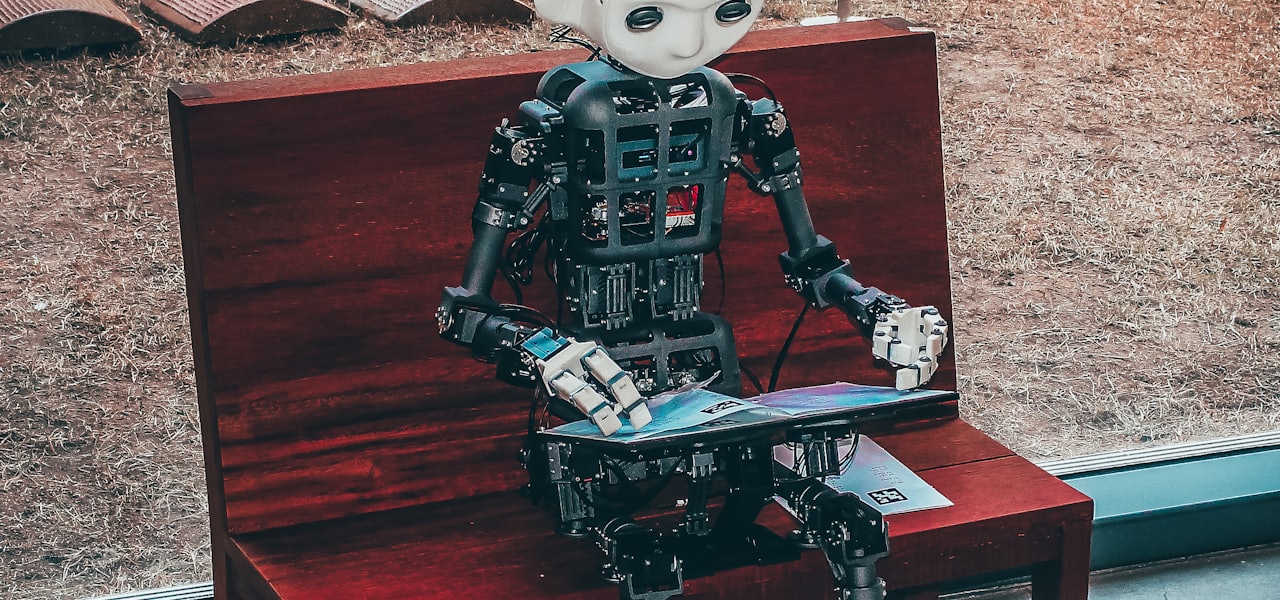
In artificial intelligence research, the situated approach builds agents that are designed to behave effectively successfully in their environment. This requires designing AI "from the bottom-up" by focussing on the basic perceptual and motor skills required to survive. The situated approach gives a much lower priority to abstract reasoning or problem-solving skills. The approach was originally proposed as an alternative to traditional approaches (that is, approaches popular before 1985 or so). After several decades, classical AI technologies started to face intractable issues (e.g. combinatorial explosion) when confronted with real-world modeling problems. All approaches to address these issues focus on modeling intelligences situated in an environment. They have become known as the situated approach to AI. == Emergence of a concept == === From traditional AI to Nouvelle AI === During the late 1980s, the approach now known as Nouvelle AI (Nouvelle means new in French) was pioneered at the MIT Artificial Intelligence Laboratory by Rodney Brooks. As opposed to classical or traditional artificial intelligence, Nouvelle AI purposely avoided the traditional goal of modeling human-level performance, but rather tries to create systems with intelligence at the level of insects, closer to real-world robots. But eventually, at least at MIT new AI did lead to an attempt for humanoid AI in the Cog Project. === From Nouvelle AI to behavior-based and situated AI === The conceptual shift introduced by nouvelle AI flourished in the robotics area, given way to behavior-based robotics (BBR), a methodology for developing AI based on a modular decomposition of intelligence. It was made famous by Rodney Brooks: his subsumption architecture was one of the earliest attempts to describe a mechanism for developing BBAI. It is extremely popular in robotics and to a lesser extent to implement intelligent virtual agents because it allows the successful creation of real-time dynamic systems that can run in complex environments. For example, it underlies the intelligence of the Sony Aibo and many RoboCup robot teams. Realizing that in fact all these approaches were aiming at building not an abstract intelligence, but rather an intelligence situated in a given environment, they have come to be known as the situated approach. In fact, this approach stems out from early insights of Alan Turing, describing the need to build machines equipped with sense organs to learn directly from the real-world instead of focusing on abstract activities, such as playing chess. == Definitions == Classically, a software entity is defined as a simulated element, able to act on itself and on its environment, and which has an internal representation of itself and of the outside world. An entity can communicate with other entities, and its behavior is the consequence of its perceptions, its representations, and its interactions with the other entities. === AI loop === Simulating entities in a virtual environment requires simulating the entire process that goes from a perception of the environment, or more generally from a stimulus, to an action on the environment. This process is called the AI loop and technology used to simulate it can be subdivided in two categories. Sensorimotor or low-level AI deals with either the perception problem (what is perceived?) or the animation problem (how are actions executed?). Decisional or high-level AI deals with the action selection problem (what is the most appropriate action in response to a given perception, i.e. what is the most appropriate behavior?). === Traditional or symbolic AI === There are two main approaches in decisional AI. The vast majority of the technologies available on the market, such as planning algorithms, finite-state machines (FSA), or expert systems, are based on the traditional or symbolic AI approach. Its main characteristics are: It is top-down: it subdivides, in a recursive manner, a given problem into a series of sub-problems that are supposedly easier to solve. It is knowledge-based: it relies on a symbolic description of the world, such as a set of rules. However, the limits of traditional AI, which goal is to build systems that mimic human intelligence, are well-known: inevitably, a combinatorial explosion of the number of rules occurs due to the complexity of the environment. In fact, it is impossible to predict all the situations that will be encountered by an autonomous entity. === Situated or behavioral AI === In order to address these issues, another approach to decisional AI, also known as situated or behavioral AI, has been proposed. It does not attempt to model systems that produce deductive reasoning processes, but rather systems that behave realistically in their environment. The main characteristics of this approach are the following: It is bottom-up: it relies on elementary behaviors, which can be combined to implement more complex behaviors. It is behavior-based: it does not rely on a symbolic description of the environment, but rather on a model of the interactions of the entities with their environment. The goal of situated AI is to model entities that are autonomous in their environment. This is achieved thanks to both the intrinsic robustness of the control architecture, and its adaptation capabilities to unforeseen situations. === Situated agents === In artificial intelligence and cognitive science, the term situated refers to an agent which is embedded in an environment. The term situated is commonly used to refer to robots, but some researchers argue that software agents can also be situated if: they exist in a dynamic (rapidly changing) environment, which they can manipulate or change through their actions, and which they can sense or perceive. Examples might include web-based agents, which can alter data or trigger processes (such as purchases) over the Internet, or virtual-reality bots which inhabit and change virtual worlds, such as Second Life. Being situated is generally considered to be part of being embodied, but it is useful to consider each perspective individually. The situated perspective emphasizes that intelligent behavior derives from the environment and the agent's interactions with it. The nature of these interactions are defined by an agent's embodiment. == Implementation principles == === Modular decomposition === The most important attribute of a system driven by situated AI is that the intelligence is controlled by a set of independent semi-autonomous modules. In the original systems, each module was actually a separate device or was at least conceived of as running on its own processing thread. Generally, though, the modules are just abstractions. In this respect, situated AI may be seen as a software engineering approach to AI, perhaps akin to object oriented design. Situated AI is often associated with reactive planning, but the two are not synonymous. Brooks advocated an extreme version of cognitive minimalism which required initially that the behavior modules were finite-state machines and thus contained no conventional memory or learning. This is associated with reactive AI because reactive AI requires reacting to the current state of the world, not to an agent's memory or preconception of that world. However, learning is obviously key to realistic strong AI, so this constraint has been relaxed, though not entirely abandoned. === Action selection mechanism === The situated AI community has presented several solutions to modeling decision-making processes, also known as action selection mechanisms. The first attempt to solve this problem goes back to subsumption architectures, which were in fact more an implementation technique than an algorithm. However, this attempt paved the way to several others, in particular the free-flow hierarchies and activation networks. A comparison of the structure and performances of these two mechanisms demonstrated the advantage of using free-flow hierarchies in solving the action selection problem. However, motor schemas and process description languages are two other approaches that have been used with success for autonomous robots. == Notes and references == Arsenio, Artur M. (2004) Towards an embodied and situated AI, In: Proceedings of the International FLAIRS conference, 2004. (online) The Artificial Life Route To Artificial Intelligence: Building Embodied, Situated Agents, Luc Steels and Rodney Brooks Eds., Lawrence Erlbaum Publishing, 1995. (ISBN 978-0805815184) Rodney A. Brooks Cambrian Intelligence (MIT Press, 1999) ISBN 0-262-52263-2; collection of early papers including "Intelligence without representation" and "Intelligence without reason", from 1986 & 1991 respectively. Ronald C. Arkin Behavior-Based Robotics (MIT Press, 1998) ISBN 0-262-01165-4 Hendriks-Jansen, Horst (1996) Catching Ourselves in the Act: Situated Activity, Interactive Emergence, Evolution, and Human Thought. Cambridge, Mass.: MIT Press.
Artificial intelligence in spirituality
Some users of artificial intelligence (AI) technologies, especially chatbots, may develop beliefs that AI has or can attain supernatural or spiritual powers. AI models such as ChatGPT are turned to for fortune telling, mysticism and remote viewing. Recent and sudden advances in large language models have led to folk myths about their origin or capabilities, as well as their deification or worship by some users. Tucker Carlson has made similar claims, including directly to Sam Altman. Pope Leo XIV advised priests against using LLM models when it came to the creation of sermons.
CrewAI
CrewAI is an open-source software framework and platform for building AI agents and multi-agent systems. Written primarily in Python, it is used to define artificial-intelligence agents, assign tasks to them, and coordinate their work through agent teams and workflows. The framework is associated with CrewAI Inc., a startup developing enterprise tools for automating business workflows with large language model-based agents. == History == CrewAI was first released on the Python Package Index in December 2023. The project was created by João Moura and later developed by CrewAI Inc. and open-source contributors. In October 2024, TechCrunch reported that CrewAI had raised $18 million across seed and Series A funding rounds from investors including Boldstart Ventures, Craft Ventures, Earl Grey Capital, and Insight Partners. The report also stated that Andrew Ng and HubSpot co-founder Dharmesh Shah had invested in the company. SiliconANGLE described the company as the developer of an open-source framework for building artificial-intelligence agents and reported that the funding consisted of a seed round led by Boldstart Ventures and a Series A led by Insight Partners. By late 2024, CrewAI had introduced commercial enterprise products built on top of its open-source components. TechCrunch reported that the company's enterprise offering added access controls, analytics, support, and templates for workflow automation. == Features == CrewAI is designed around groups of agents, sometimes called "crews", that can be assigned roles, goals, and tasks. The framework supports agent collaboration, task delegation, tool use, memory, and knowledge sources for retrieval-augmented generation workflows. The project describes two main building blocks: "Crews", which are used for autonomous agent collaboration, and "Flows", which are used for more controlled event-driven workflows. The framework is independent of LangChain and is released under the MIT License. It can be installed as a Python package and is commonly used with external large language model APIs or local models, depending on the developer's configuration. == Business model == CrewAI combines an open-source framework with commercial enterprise products. Its enterprise products are intended for organizations that need to build, monitor, and manage agent-based automations with additional security, observability, and administrative controls.
GPT-5
GPT-5 is a multimodal large language model developed by OpenAI and the fifth in its series of generative pre-trained transformer (GPT) foundation models. Preceded in the series by GPT-4, it was launched on August 7, 2025. It is publicly accessible to users of the chatbot products ChatGPT and Microsoft Copilot as well as to developers through the OpenAI API. == Background == On April 14, 2023, Sam Altman, the chief executive officer of OpenAI, spoke at an event at the Massachusetts Institute of Technology and said that the company was not training GPT-5 at that time. He stated that OpenAI was "prioritizing GPT-4 development" and that "we are not and won't for some time" release GPT-5. On July 18, OpenAI filed for a "GPT-5" trademark in the United States. On November 13, Altman confirmed to the Financial Times that the company was working to develop GPT-5. According to The Information, "[f]or much of the second half of 2024, OpenAI was developing a model known internally as Orion and intended to become GPT-5", "[b]ut the Orion effort failed to produce a better model, and the company instead released it as GPT-4.5 in February [2025]." By late July 2025, OpenAI was widely anticipated as planning to release GPT-5 in early August. On July 30, The Verge reported that "Microsoft is getting ready for GPT-5" as "sources familiar with Microsoft's AI plans" told an editor that the company was testing a new mode for its Copilot chatbot that would offer a model that "thinks deeply or quickly based on the task". On August 5, in the leadup to the release of GPT-5, OpenAI released GPT-OSS, a set of two open-weight models that have reasoning capabilities. GPT-5 was then unveiled during a livestream event on August 7. == Capabilities == At the time of its release, GPT-5 had state-of-the-art performance on benchmarks that test mathematics, programming, finance, and multimodal understanding. According to OpenAI, improvements over its predecessor models include faster response times, better coding and writing skills, more accurate answers to health questions, and lower levels of hallucination. Also, compared to previous models, GPT-5 aims to give safe, high-level responses to potentially harmful queries rather than outright declining them, an approach that OpenAI refers to as "safe completions", aiming to result "in GPT-5 being able to refuse more unsafe questions, while offering fewer rejections to users seeking harmless information." In addition, GPT-5 was trained to give more critical, "less effusively agreeable" answers compared to its predecessor models. Days before the launch of GPT-5, two early testers of the model stated that they were "impressed" by its ability to code and to solve mathematical and scientific problems. They suggested that the model shows great improvement from GPT-4, but not as large of a gain as from GPT-3 to GPT-4. A day prior to the release of GPT-5, during a press briefing, Sam Altman, the chief executive officer of OpenAI, called GPT-5 "a significant step along the path to AGI", referring to artificial general intelligence, the hypothetical level of intelligence that OpenAI defines as the ability to perform any economically valuable task that a human can. According to Altman, GPT-5 is "significantly better" than its predecessors, offering "PhD-level" abilities across a wide range of tasks. The exact energy consumption of GPT-5 use has not been disclosed by OpenAI. Researchers at the University of Rhode Island estimated that a medium-length response consumes slightly over 18 watt-hours, equivalent to using an incandescent bulb for 18 minutes. === Architecture === GPT-5 is a system that contains a fast, high-throughput model, a deeper reasoning model, and a real-time router that decides which model to use based on conversation type, complexity, tool needs, and explicit user intent. Altman had previously criticized the manual model picker for being overly complex, suggesting a need for unification. GPT-5 also includes agentic functionality through which it can set up its own desktop and can use its browser to search autonomously for sources that relate to its task. The GPT-5 system card defines two fast, high-throughput models – gpt-5-main and gpt-5-main-mini – and two thinking models – gpt-5-thinking and gpt-5-thinking-mini. In the OpenAI API, developers can access the thinking model, its mini version, and gpt-5-thinking-nano, an even smaller and faster nano version of the thinking model. The version of GPT-5 that is accessible via the API has adjustable reasoning effort (low, medium, high, or minimal) and verbosity (low, medium, or high). Additionally, ChatGPT provides access to gpt-5-thinking with a setting that makes use of parallel test-time compute, referred to as gpt-5-thinking-pro. == Limitations == === Safety === Neuraltrust, a security research company, claimed to have successfully compromised GPT-5 within its first day of testing the model. According to its report, it enabled GPT-5 to generate detailed instructions for manufacturing explosive devices. SPLX, another company, conducted similar tests and came to similar conclusions about GPT-5's security. Their assessments suggest that GPT-5 has significant security gaps, potentially rendering it as being unsafe for use in a corporate environment. == Training == According to AIMultiple, GPT-5 is natively multimodal, meaning that it was trained from scratch on multiple modalities (like text and images) at once without relying on already-trained language or vision models. Its training process involved three stages: unsupervised pretraining, supervised fine-tuning, and reinforcement learning from human feedback. Pretraining used a large-scale multilingual dataset of books, articles, web pages, academic papers, and licensed sources. GPT-5's visual and text capabilities were described as having been developed alongside each other throughout training, unlike with GPT-4. == Use == GPT-5 is used in ChatGPT. Although GPT-5 is free for all ChatGPT users, Plus users get higher use limits while Pro users get unlimited access to GPT-5 as well as limited access to GPT-5 Pro. Standard limits for lower-tier users on responses per hour still apply. Additionally, with the introduction of GPT-5, ChatGPT's "Advanced Voice Mode" was replaced by "ChatGPT Voice", which is supposed to enable more natural-sounding conversations. OpenAI stated that "Standard Voice Mode retires on September 9, 2025, unifying all users on ChatGPT Voice". On November 24, 2025, the feature of shopping research was added to ChatGPT, claimed to be a mini model post-trained on gpt-5-thinking-mini. GPT-5 is also available in Microsoft Copilot, and Microsoft stated that it will incorporate GPT-5 into a wide variety of its products. According to 9to5Mac, Apple Inc. is planning to integrate the model into the Apple Intelligence feature in its iOS 26, iPadOS 26, and macOS Tahoe operating systems. It is also accessible via the OpenAI API. A number of American companies were reported as having received access to GPT-5 ahead of its launch. OpenAI stated that the private health insurance company Oscar Health was checking applications from its policyholders with the model. In addition, Uber was using GPT-5 for its customer support system; GitLab, Windsurf, and Cursor were using the model for software development; and the Spanish bank BBVA was using it for financial analysis. Other companies that OpenAI listed as having used GPT-5 pre-release include Amgen, Lowe's, and Notion. == Reception == === Critical reviews === Grace Huckins in MIT Technology Review found that, "[w]hereas o1 was a major technological advancement, GPT-5 is, above all else, a refined product." In response to claims that Sam Altman, the chief executive officer of OpenAI, had made about the model, she stated that "GPT-5 will furnish a more pleasant and seamless user experience. That's not nothing, but it falls far short of the transformative AI future that Altman has spent much of the past year hyping." In response to Altman's claim that GPT-5 is "a significant step along the path" to artificial general intelligence, she noted: "[M]aybe he's right—but if so, it's a very small step." In The Information, Stephanie Palazzolo praised GPT-5's coding capabilities. According to Matteo Wong in The Atlantic, GPT-5 "is intuitive, fast, and efficient; adapts to human preferences and intentions; and is easy to personalize." He stated: "At this stage of the AI boom, when every major chatbot is legitimately helpful in numerous ways, benchmarks, science, and rigor feel almost insignificant. What matters is how the chatbot feels [...]". John Herrman from the New York magazine wrote: "Casual users who encounter GPT-5 through ChatGPT aren't likely to feel like they're using a completely different product [...] while people who use it for software development or in a corporate context are more likely to notice a major change." Mashable's Christian de Looper found that "GPT-5
Intelligent agent
In artificial intelligence, an intelligent agent is an entity that perceives its environment, takes actions autonomously to achieve goals, and may improve its performance through machine learning or by acquiring knowledge. AI textbooks define artificial intelligence as the "study and design of intelligent agents," emphasizing that goal-directed behavior is central to intelligence. A specialized subset of intelligent agents, agentic AI (also known as an AI agent or simply agent), expands this concept by proactively pursuing goals, making decisions, and taking actions over extended periods. Intelligent agents can range from simple to highly complex. A basic thermostat or control system is considered an intelligent agent, as is a human being, or any other system that meets the same criteria—such as a firm, a state, or a biome. Intelligent agents operate based on an objective function, which encapsulates their goals. They are designed to create and execute plans that maximize the expected value of this function upon completion. For example, a reinforcement learning agent has a reward function, which allows programmers to shape its desired behavior. Similarly, an evolutionary algorithm's behavior is guided by a fitness function. Intelligent agents in artificial intelligence are closely related to agents in economics, and versions of the intelligent agent paradigm are studied in cognitive science, ethics, and the philosophy of practical reason, as well as in many interdisciplinary socio-cognitive modeling and computer social simulations. Intelligent agents are often described schematically as abstract functional systems similar to computer programs . To distinguish theoretical models from real-world implementations, abstract descriptions of intelligent agents are called abstract intelligent agents. Intelligent agents are also closely related to software agents—autonomous computer programs that carry out tasks on behalf of users. They are also referred to using a term borrowed from economics: a "rational agent". == Intelligent agents as the foundation of AI == The concept of intelligent agents provides a foundational lens through which to define and understand artificial intelligence. For instance, the influential textbook Artificial Intelligence: A Modern Approach (Russell & Norvig) describes: Agent: Anything that perceives its environment (using sensors) and acts upon it (using actuators). E.g., a robot with cameras and wheels, or a software program that reads data and makes recommendations. Rational Agent: An agent that strives to achieve the best possible outcome based on its knowledge and past experiences. "Best" is defined by a performance measure – a way of evaluating how well the agent is doing. Artificial Intelligence (as a field): The study and creation of these rational agents. Other researchers and definitions build upon this foundation. Padgham & Winikoff emphasize that intelligent agents should react to changes in their environment in a timely way, proactively pursue goals, and be flexible and robust (able to handle unexpected situations). Some also suggest that ideal agents should be "rational" in the economic sense (making optimal choices) and capable of complex reasoning, like having beliefs, desires, and intentions (BDI model). Kaplan and Haenlein offer a similar definition, focusing on a system's ability to understand external data, learn from that data, and use what is learned to achieve goals through flexible adaptation. Defining AI in terms of intelligent agents offers several key advantages: Avoids Philosophical Debates: It sidesteps arguments about whether AI is "truly" intelligent or conscious, like those raised by the Turing test or Searle's Chinese Room. It focuses on behavior and goal achievement, not on replicating human thought. Objective Testing: It provides a clear, scientific way to evaluate AI systems. Researchers can compare different approaches by measuring how well they maximize a specific "goal function" (or objective function). This allows for direct comparison and combination of techniques. Interdisciplinary Communication: It creates a common language for AI researchers to collaborate with other fields like mathematical optimization and economics, which also use concepts like "goals" and "rational agents." == Objective function == An objective function (or goal function) specifies the goals of an intelligent agent. An agent is deemed more intelligent if it consistently selects actions that yield outcomes better aligned with its objective function. In effect, the objective function serves as a measure of success. The objective function may be: Simple: For example, in a game of Go, the objective function might assign a value of 1 for a win and 0 for a loss. Complex: It might require the agent to evaluate and learn from past actions, adapting its behavior based on patterns that have proven effective. The objective function encapsulates all of the goals the agent is designed to achieve. For rational agents, it also incorporates the trade-offs between potentially conflicting goals. For instance, a self-driving car's objective function might balance factors such as safety, speed, and passenger comfort. Different terms are used to describe this concept, depending on the context. These include: Utility function: Often used in economics and decision theory, representing the desirability of a state. Objective function: A general term used in optimization. Loss function: Typically used in machine learning, where the goal is to minimize the loss (error). Reward Function: Used in reinforcement learning. Fitness Function: Used in evolutionary systems. Goals, and therefore the objective function, can be: Explicitly defined: Programmed directly into the agent. Induced: Learned or evolved over time. In reinforcement learning, a "reward function" provides feedback, encouraging desired behaviors and discouraging undesirable ones. The agent learns to maximize its cumulative reward. In evolutionary systems, a "fitness function" determines which agents are more likely to reproduce. This is analogous to natural selection, where organisms evolve to maximize their chances of survival and reproduction. Some AI systems, such as nearest-neighbor, reason by analogy rather than being explicitly goal-driven. However, even these systems can have goals implicitly defined within their training data. Such systems can still be benchmarked by framing the non-goal system as one whose "goal" is to accomplish its narrow classification task. Systems not traditionally considered agents, like knowledge-representation systems, are sometimes included in the paradigm by framing them as agents with a goal of, for example, answering questions accurately. Here, the concept of an "action" is extended to encompass the "act" of providing an answer. As a further extension, mimicry-driven systems can be framed as agents optimizing a "goal function" based on how closely the agent mimics the desired behavior. In generative adversarial networks (GANs) of the 2010s, an "encoder"/"generator" component attempts to mimic and improvise human text composition. The generator tries to maximize a function representing how well it can fool an antagonistic "predictor"/"discriminator" component. While symbolic AI systems often use an explicit goal function, the paradigm also applies to neural networks and evolutionary computing. Reinforcement learning can generate intelligent agents that appear to act in ways intended to maximize a "reward function". Sometimes, instead of setting the reward function directly equal to the desired benchmark evaluation function, machine learning programmers use reward shaping to initially give the machine rewards for incremental progress. Yann LeCun stated in 2018, "Most of the learning algorithms that people have come up with essentially consist of minimizing some objective function." AlphaZero chess had a simple objective function: +1 point for each win, and -1 point for each loss. A self-driving car's objective function would be more complex. Evolutionary computing can evolve intelligent agents that appear to act in ways intended to maximize a "fitness function" influencing how many descendants each agent is allowed to leave. The mathematical formalism of AIXI was proposed as a maximally intelligent agent in this paradigm. However, AIXI is uncomputable. In the real world, an intelligent agent is constrained by finite time and hardware resources, and scientists compete to produce algorithms that achieve progressively higher scores on benchmark tests with existing hardware. == Agent function == An intelligent agent's behavior can be described mathematically by an agent function. This function determines what the agent does based on what it has seen. A percept refers to the agent's sensory inputs at a single point in time. For example, a self-driving car's percepts might include camera images, lidar data, GPS coordinates, and speed r